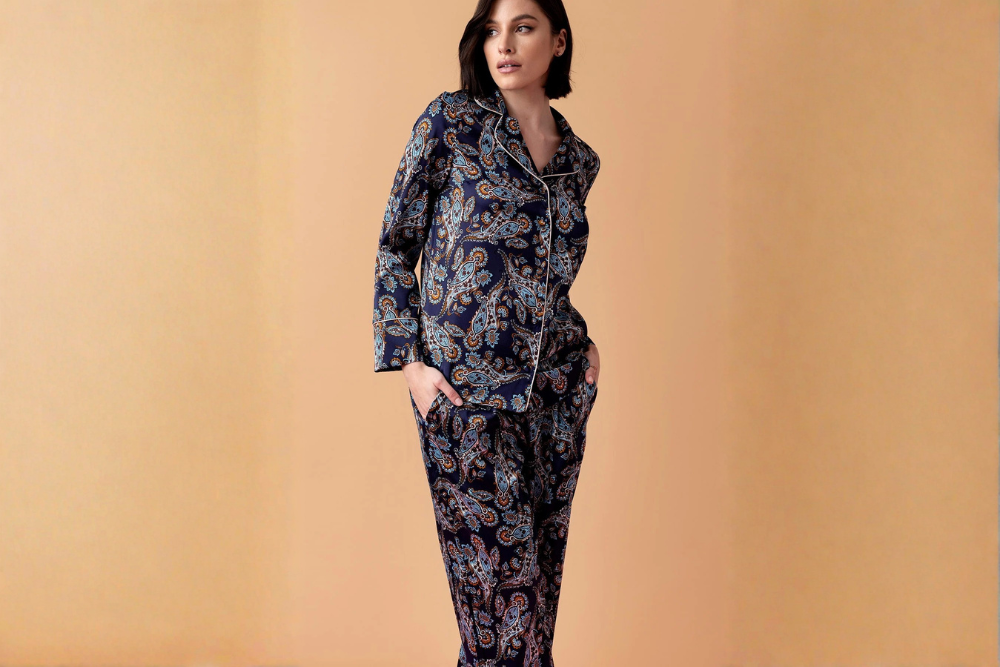
The first few weeks with a newborn quickly change your perspective on sleepwear. When waking up and feeding become frequent, even in the middle of the night, it's not just about the softness of the fabric, but also whether the nightgown can be easily unbuttoned with one hand to expose the breast without taking off the entire top. That's why a button-down nightgown can be one of the most practical items in a nursing mother's wardrobe. However, it's worth paying attention not only to the fastening itself but also to the length of the button placket, the looseness of the cut, the type of fabric, sleeve length, and ease of frequent washing, to choose a model that is comfortable both during the postpartum period and in the following months.
- Why is a button-down nightgown suitable for breastfeeding?
- What to look for when choosing a nightgown for a nursing mother?
- What nightgown material will ensure comfort for a mother?
- Long or short sleeves – which to choose for nursing?
- Can a nursing nightgown be both feminine and elegant?
- Nightgown or button-down pajamas – what will be more comfortable for a nursing mother?
- How to choose the size and style of a nightgown after childbirth?
- How to care for a nightgown used during breastfeeding?
- Button-down nightgown for nursing mothers – FAQ
Why is a button-down nightgown suitable for breastfeeding?
A button-down nightgown is suitable for nursing primarily because it allows you to quickly expose the breast without having to pull up the entire nightgown or remove its top part. This is particularly practical at night, when a convenient fastening allows you to prepare for feeding with minimal movement and without unnecessary waking.
However, the most important thing is not just the presence of buttons, but the design of the fastening. The placket should extend low enough so that after unbuttoning a few buttons, the fabric can be freely moved aside. The ease of unbuttoning also matters – small, tightly set buttons can be less practical, especially when the mother is already holding the baby. When choosing women's nightgowns, it's good to view the fastening as a functional element, not just decorative.
The button-down style has another advantage: it is not a solution exclusively for the nursing period. A classic button-down nightgown can serve long after it's over, so instead of buying sleepwear useful for only a short time, you can opt for a versatile model combining comfort, aesthetics, and functionality. In practice, a well-designed button-down nightgown offers several significant benefits:
- Faster access to the breast – just unbutton the appropriate number of buttons.
- Less fabric manipulation – no need to pull the nightgown high during feeding.
- Convenience during night awakenings – a well-designed fastening can be operated smoothly even in dim light.
- Versatility – the nightgown remains a full-fledged item of sleepwear even after breastfeeding ends.
What to look for when choosing a nightgown for a nursing mother?

When choosing a nightgown for a nursing mother, the most important factors are convenient access to the breast, a sufficiently loose fit, and skin-friendly fabric. In practice, comfort is often determined by small design elements – the length of the opening, the placement of buttons, or the amount of room around the bust. The nightgown should facilitate feeding, but also be suitable for sleep and daily relaxation.
Special attention should be paid to the fastening. A placket that is too short can make it difficult to expose the breast freely, while a sufficiently deep opening allows the fabric to be moved aside without excessive pulling. It's also good to check if the buttons can be easily grasped and unbuttoned with one hand. During night feedings, such seemingly small differences can be more significant than additional decorations or a trendy detail.
The second criterion is the style. After childbirth, the body needs time, so the nightgown should not tightly hug the abdomen or bust. However, this does not mean you have to choose a very oversized model. A slightly loose cut allows freedom of movement, while still maintaining a feminine, elegant line. It's also worth paying attention to the seams, neckline finish, and other elements close to sensitive skin.
Women's classic nightgowns are a good point of reference, as their timeless style can be used not only in the first months of motherhood. This is a practical approach to purchasing: instead of treating a nightgown as lingerie for one stage of life, you can choose a high-quality model that will remain comfortable and aesthetic even after nursing ends.
Before purchasing, it's a good idea to perform a simple "one-hand test": imagine if, while holding your baby, you can effortlessly unbutton the nightgown, move the fabric aside, and button it back up. If it requires tugging at the fabric, reaching for hard-to-access buttons, or heavily pulling back the neckline, the mere fact of having a button fastening does not yet guarantee comfort during nursing.
What nightgown material will ensure comfort for a mother?
During the nursing period, the best material is one that is soft, breathable, and pleasant for sensitive skin. A nightgown is in direct contact with the body for many hours, and after childbirth, comfort can be even more important than before. Viscose is a good choice, combining delicacy with lightness and draping well on the figure.
Viscose is a cellulosic fiber produced from plant-based raw material. Materials made with it can be soft, smooth, and comfortable to wear, which is why women's viscose nightgowns are an interesting option for women looking for sleepwear suitable for both the nursing period and beyond. In Oh!Zuza collections, viscose is one of the key materials used in sleepwear, allowing for a combination of comfort with refined, feminine styles.
When choosing, it's worth evaluating the material not just by its name on the tag. For a nursing mother, what matters is how it behaves during many hours of wear and contact with the skin. In practice, particularly important aspects are:
- softness – the material should not be rough or cause additional discomfort in the breast area;
- breathability – important especially during warmer nights and with postpartum temperature changes;
- freedom of drape on the figure – a flowing material should not unnecessarily restrict movement during sleep and feeding;
- easy care – during infant care, the nightgown may require more frequent washing, so it's always good to follow the manufacturer's recommendations on the label.
It's important to distinguish between viscose and satin. Viscose refers to the type of fiber, while satin is a type of weave, so these terms are not synonymous. A satin effect can be achieved with various fibers, and viscose satin combines the characteristic smoothness and subtle sheen of a satin weave with the properties of viscose. This is an important distinction, especially when comparing the composition and properties of different nightgowns.
Viscose doesn't have to be reserved exclusively for nightwear. Women's viscose clothing shows that this type of fiber also works well in daytime wardrobes. For a mother, this can be an additional tip when assembling post-childbirth outfits, when soft materials and loose styles are particularly valued.
Long or short sleeves – which to choose for nursing?

Sleeve length is best chosen to match the bedroom temperature, season, and your personal thermal comfort. Short sleeves provide more lightness during warmer nights, while long sleeves offer extra coverage when the room is cooler. The sleeve itself does not affect breast access, so with both options, a comfortable front fastening and a sufficiently loose fit remain key.
Women's short-sleeved nightgowns can be a good choice for summer, a warm bedroom, or for women who easily overheat. Exposed forearms also have a practical advantage during evening baby care or night awakenings – the fabric doesn't slide onto your hands, and you don't have to roll up your sleeves.
On the other hand, women's long-sleeved nightgowns are worth considering in autumn and winter, and when the mother often gets up at night and doesn't want to reach for an extra cover every time. Long sleeves can provide a pleasant wrap for the arms, while the button-down front still allows for comfortable nursing.
You don't have to strictly follow the rule "short sleeves for summer, long for winter." A much better criterion is the actual temperature in the place where the mother sleeps and nurses the baby. This ensures the nightgown meets daily needs, rather than being chosen solely by the season.
Can a nursing nightgown be both feminine and elegant?
Yes. A comfortable nursing nightgown doesn't have to resemble typical clothing designed exclusively for the postpartum period. A button-down front can be both a practical solution and an element of an elegant design, and a well-chosen cut, color, and careful finishing mean the same model can be worn long after nursing ends.
A good example of this approach is the Poem short button-down nightgown – almond milk. The button-down style meets the practical need for easy breast access, while the subdued colors and refined form mean the nightgown is not visually limited to the period of motherhood. An alternative in a similar, light tone is the Poem short button-down nightgown – cream.
However, feminine nightwear doesn't have to be associated only with delicate colors. The Poem short button-down nightgown – red wine might appeal to women who prefer deeper, more expressive colors, while the Poem short button-down nightgown – black fits a timeless, elegant aesthetic.
This approach also matters for psychological comfort after childbirth. While sleepwear primarily serves a functional purpose, it can also reflect a woman's individual style. Practicality and femininity are not opposites – a well-designed nightgown can combine both qualities. Oh!Zuza focuses on combining quality materials, comfortable designs, and modern aesthetics, allowing button-down styles to remain part of your night wardrobe for many seasons.
 Katarzyna Pastwa - Oh!Zuza expert
When choosing a nightgown for the nursing period, it's worth thinking not only about the first few weeks after childbirth. A button-down style can facilitate breast access, but if it's also well-cut, made from a pleasant material, and matches a woman's style, it will remain in her wardrobe later on. This is a much more versatile solution than buying sleepwear exclusively for the short nursing phase.
More practical tips on completing your wardrobe for this special period can also be found in the guide sleepwear for expectant mothers – comfort during pregnancy and postpartum, which discusses in more detail the needs of women before and after childbirth.
Nightgown or button-down pajamas – what will be more comfortable for a nursing mama?
During nursing, both a nightgown and button-down pajamas can be comfortable, but they address slightly different needs. A nightgown offers more freedom around the abdomen and has no pant waistband, while pajamas provide extra leg coverage and may be better suited for colder nights. In both cases, functionality during nursing is primarily determined by an easily accessible fastening.
A nightgown can be especially comfortable in the immediate postpartum period. The absence of elastic or ties at the waist means fewer elements in contact with the abdomen, and a looser bottom doesn't restrict movement when getting out of bed and changing positions. It's also a straightforward choice for women who preferred sleeping in nightgowns before pregnancy and don't want to change their habits.
On the other hand, women's button-down pajamas may appeal to mothers who prefer to sleep in two-piece sleepwear. The button-down top provides breast access, and the pants offer extra coverage when getting up at night. When choosing, however, it's worth paying attention to the waistband – it should be comfortable and not cause uncomfortable pressure.
The main differences can be summarized into a few practical situations:
- if freedom around the abdomen is a priority – a nightgown may have an advantage;
- if the mother likes to have her legs covered – two-piece pajamas may be more comfortable;
- if the bedroom is cold – pants can provide additional thermal comfort;
- if quick changing is important – a nightgown is a simple, one-piece item of sleepwear;
- if the mother already has clear sleep preferences – there's no need to change them solely because of nursing, as long as the chosen model provides convenient breast access.
There is no single solution that will be best for every nursing mother. It's worth choosing according to your own habits, bedroom temperature, and postpartum comfort, rather than being guided solely by the "nursing" label. Well-designed nightgowns and pajamas can serve their purpose later too, so the purchase is not limited to the first few months of motherhood.
How to choose the size and style of a nightgown after childbirth?
A nightgown after childbirth should primarily provide freedom around the bust, abdomen, and arms, but it doesn't need to be several sizes larger. A better solution is a correctly chosen size and style that naturally allows room for movement and body changes. A model that is too tight can make nursing difficult, while an excessively loose one may not always be comfortable during sleep.
When choosing the size, special attention should be paid to the bust circumference. During lactation, its size can change, so the fabric should not pull tightly between the buttons. If, after fastening, the placket gaps at the bust level or there is noticeable tension when sitting down and raising arms, it's worth considering a different size or a looser cut. Comparing your own measurements with the size chart for a specific model will be helpful, rather than relying solely on the size worn before pregnancy.
Length also matters. A shorter nightgown can provide more leg freedom and work well in a warmer bedroom, while a longer model offers more coverage. Regardless of the variant, it's good to check if the nightgown doesn't ride up excessively when sitting down to nurse and if you can comfortably change positions. A good style should cooperate with body movement, rather than requiring constant adjustment of the fabric.
You don't have to limit yourself to models designed exclusively as maternity lingerie. At Oh!Zuza's fashionable women's lingerie store, you'll find carefully crafted styles where comfort combines with modern, feminine aesthetics. With the right cut, a button-down nightgown can meet nursing needs while remaining part of your wardrobe long after that period ends.
The best way to practically test the size is not only when standing. After putting on the shirt, it is worth sitting down, raising your arms, lying on your side, and checking access to the buttons. It is in such positions that it is easier to notice if the material does not pull under the arms, if the placket stays in place, and if the neckline can be comfortably unbuttoned. Such a few-minute test says more about the usefulness of the nightgown during nighttime feeding than just the letter on the tag.
How to care for a nightgown used during breastfeeding?
A nightgown used during breastfeeding should be cared for according to the instructions on the tag, especially if it is made of delicate materials. Regular washing is natural during this period, so the care method is important for maintaining the softness, color, and cut of the nightwear. Instead of using one scheme for all nightgowns, it is best to follow the manufacturer's recommendations for a specific model.
During feeding, the material may get stained with milk, cosmetics, or sweat. In such a situation, it is good to react as quickly as possible and not let the stain dry. However, this does not mean that a delicate nightgown should automatically be washed at a high temperature. Washing parameters should result from the composition and care labels, because too intense washing can accelerate the wear of delicate fibers.
If viscose nightgowns dominate your nightwear, gentle handling of the material is particularly important. Viscose is valued for its softness and pleasant feel against the skin, but its care should always follow the instructions for the specific product. Thanks to this, a high-quality nightgown can maintain an aesthetic appearance despite frequent use.
In daily care, a few simple rules are useful:
- check the label before washing – similarly looking materials may require a different temperature or program;
- remove stains as quickly as possible – a fresh stain usually does not require as intense action as a stain left for longer;
- fasten or secure the nightgown before washing according to the recommendations – pay particular attention to buttons and delicate finishes;
- avoid unnecessary rubbing and strong wringing – delicate materials are better treated gently;
- thoroughly dry the nightgown before putting it away – frequent use should not mean wearing still damp nightwear.
A good solution during breastfeeding is also to have several nightgowns to change into. This is not just about comfort – rotating nightwear reduces the need for constant washing and drying of the same model. It is worth choosing styles that will also be useful later. Classic nightgowns can remain part of your wardrobe long after breastfeeding ends, so proper care is also important in the long run.
Button-down nightgown for breastfeeding mothers – FAQ
Is a button-down nightgown suitable for breastfeeding?
Yes, provided that the fastening allows for comfortable breast exposure. The most practical is an appropriately long button placket that can be easily unbuttoned without pulling up the entire nightgown. Before purchasing, it is worth paying attention not only to the presence of buttons, but also to their placement and ease of unbuttoning.
What kind of nightgown is best for a breastfeeding mother?
A soft, airy, and loose nightgown with a button-down front will work well. The cut should not compress the bust or abdomen, and the material should be pleasant to the touch. It is worth choosing models that will remain comfortable and aesthetic even after breastfeeding ends.
Is viscose a good choice for a nightgown during breastfeeding?
Viscose can be a very good choice due to its softness, lightness, and wearing comfort. In the case of nightwear used for many hours, the pleasant feel of the material on the skin is particularly important. However, the washing and drying method should always be adapted to the recommendations on the label of the specific product.
Is a nightgown or button-down pajamas better for breastfeeding?
It depends on individual preferences. A nightgown does not have a waistband and provides great freedom in the abdominal area, while pajamas also cover the legs. In both cases, the most important thing is a top fastening that allows quick and convenient access to the breast.
Do you need to buy a special nightgown for breastfeeding?
Not always. A classic button-down nightgown can work well during breastfeeding if it has a sufficiently deep fastening, a loose fit, and a comfortable material. The advantage of such a solution is its versatility – the nightgown can still be worn when easy access to the breast is no longer needed.
Can an elegant nightgown be practical during breastfeeding?
Yes. A functional fastening can be combined with a refined cut and high-quality material. For women looking for more luxurious nightwear, an interesting option is the Lullaby silk nightgown with a collar by Oh!Zuza – deep navy blue, paisley pattern. When choosing a model for the breastfeeding period, however, it is always worth checking whether the method and depth of unbuttoning meet the individual needs of the mother.
How to choose the size of a nightgown after childbirth?
It is best to measure your figure and compare the results with the size chart of the specific model. The bust circumference is particularly important, as it can change during lactation. When fastened, the buttons should not cause tension or gaping of the material at the bust level.
How many nightgowns should you have during breastfeeding?
There is no single correct number, as it depends on the frequency of washing and individual needs. In practice, several models to change into facilitate daily functioning, as nightwear may require more frequent washing when caring for an infant.