Cotton Dresses — For Everyday, Work, and Summer
Oh!Zuza's collection of cotton dresses is sewn in our Łódź workshop, where natural cotton fibers are combined with blends that provide flexibility and shape retention. Here you'll find models made of pure cotton, cotton with a small amount of elastane, and ribbed knit with cotton and acrylic — three different interpretations of the same idea for a comfortable, feminine dress.
Each of these compositions has a different purpose. Pure cotton breathes best and is best for hot weather, but it wrinkles and loses shape more quickly. The addition of elastane ensures that the dress returns to its shape after a full day of wear and doesn't stretch out at the knees or elbows. Ribbed knit with cotton and acrylic, on the other hand, provides a figure-hugging fit and a soft elasticity that cannot be achieved with a plain weave fabric.
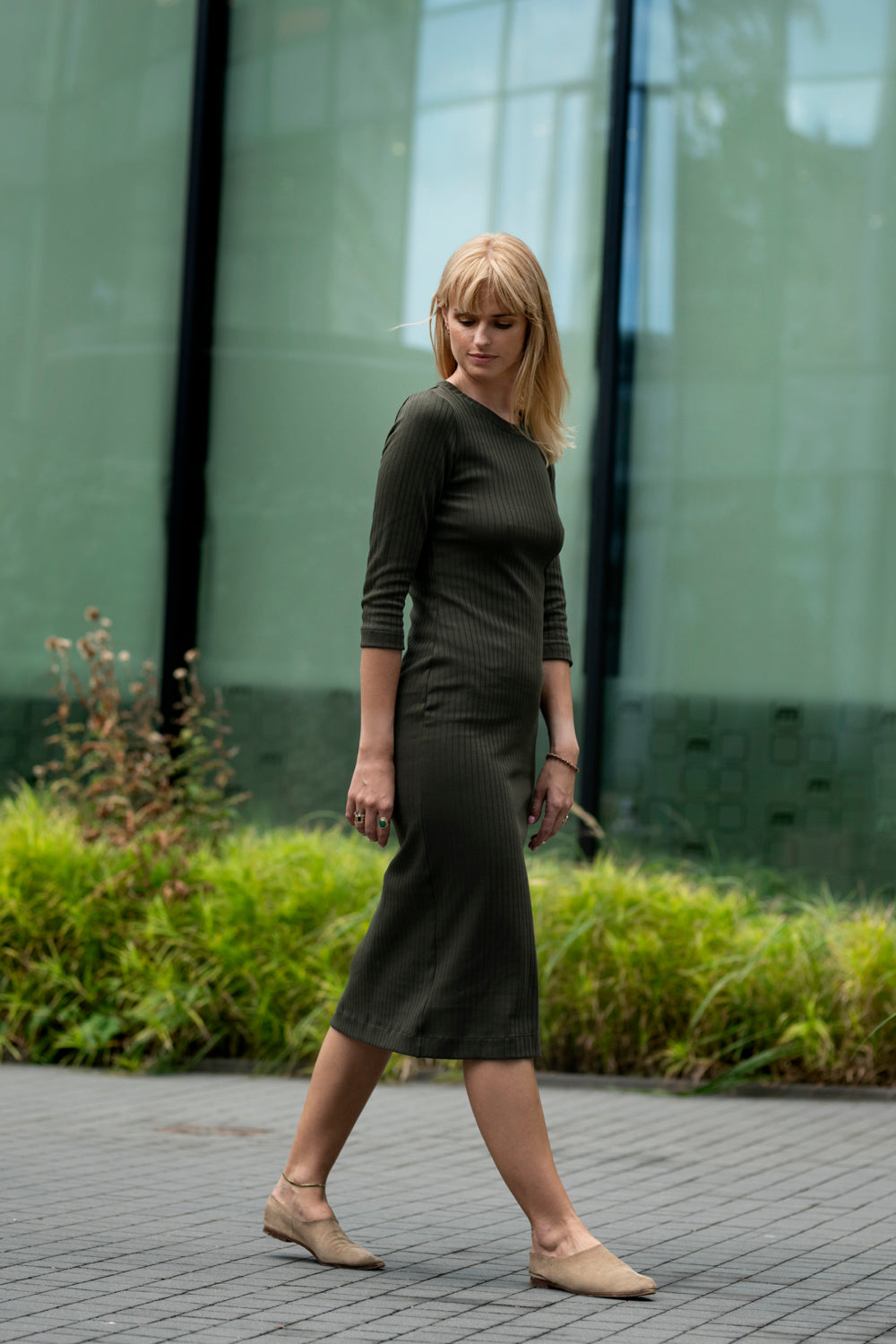
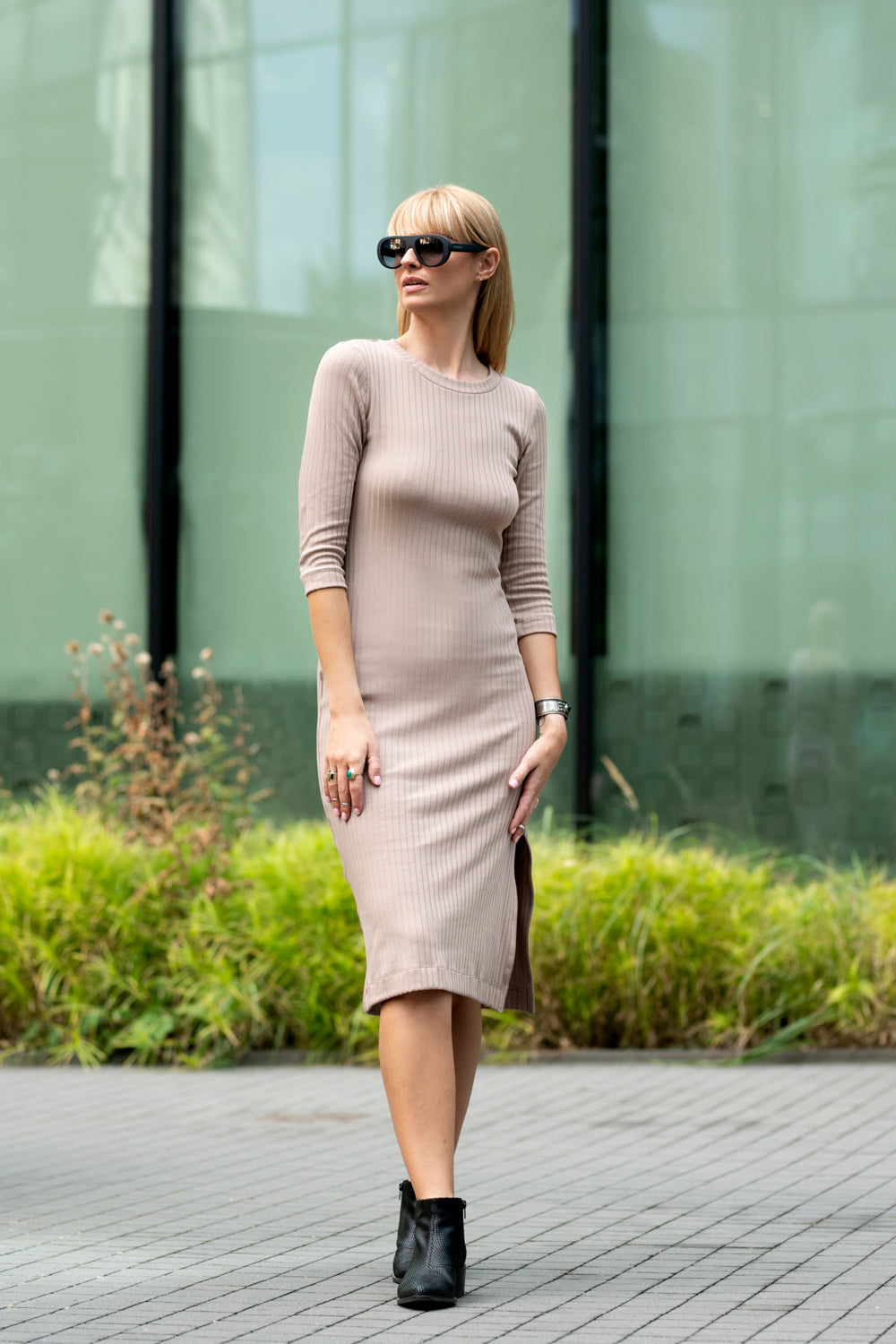
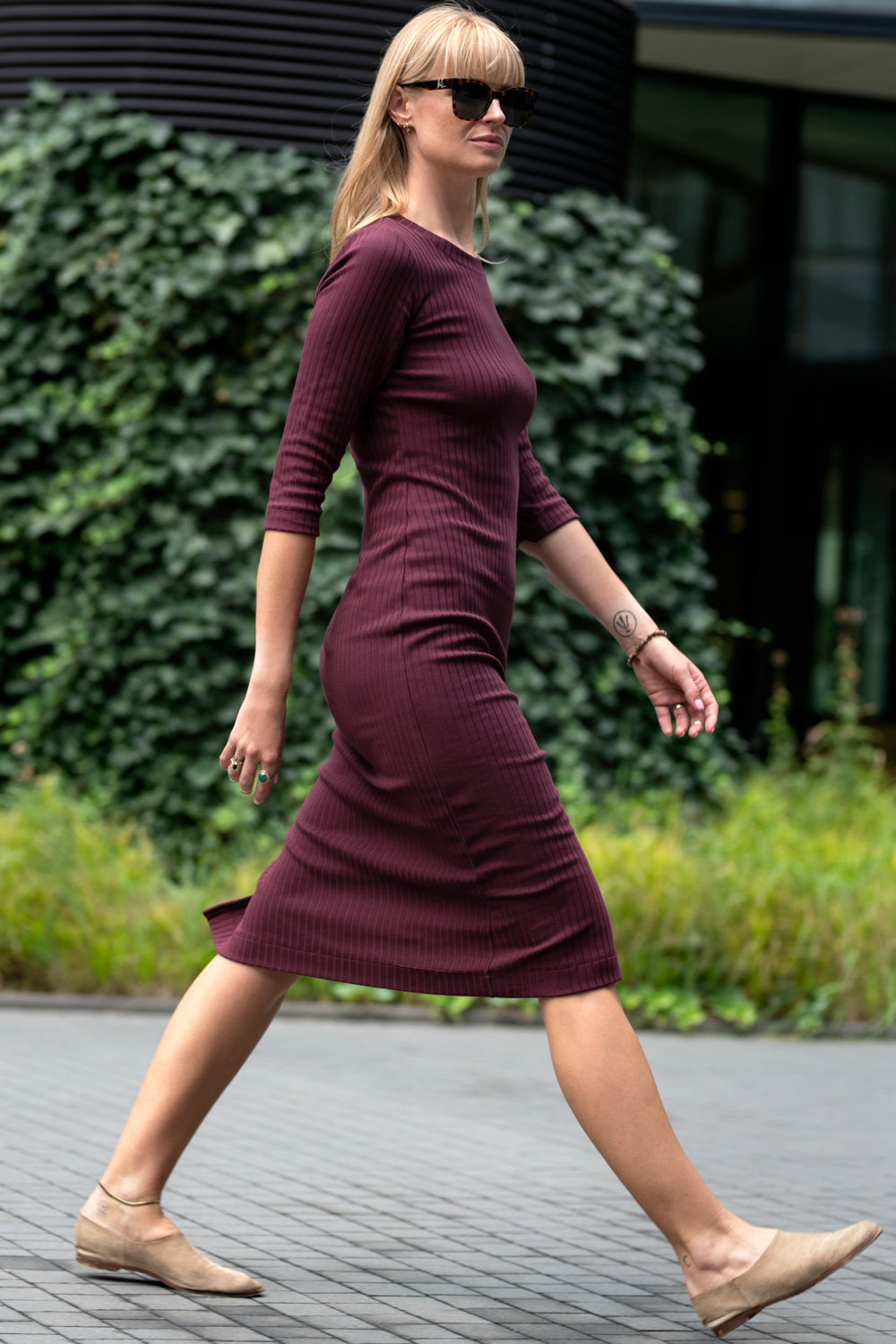
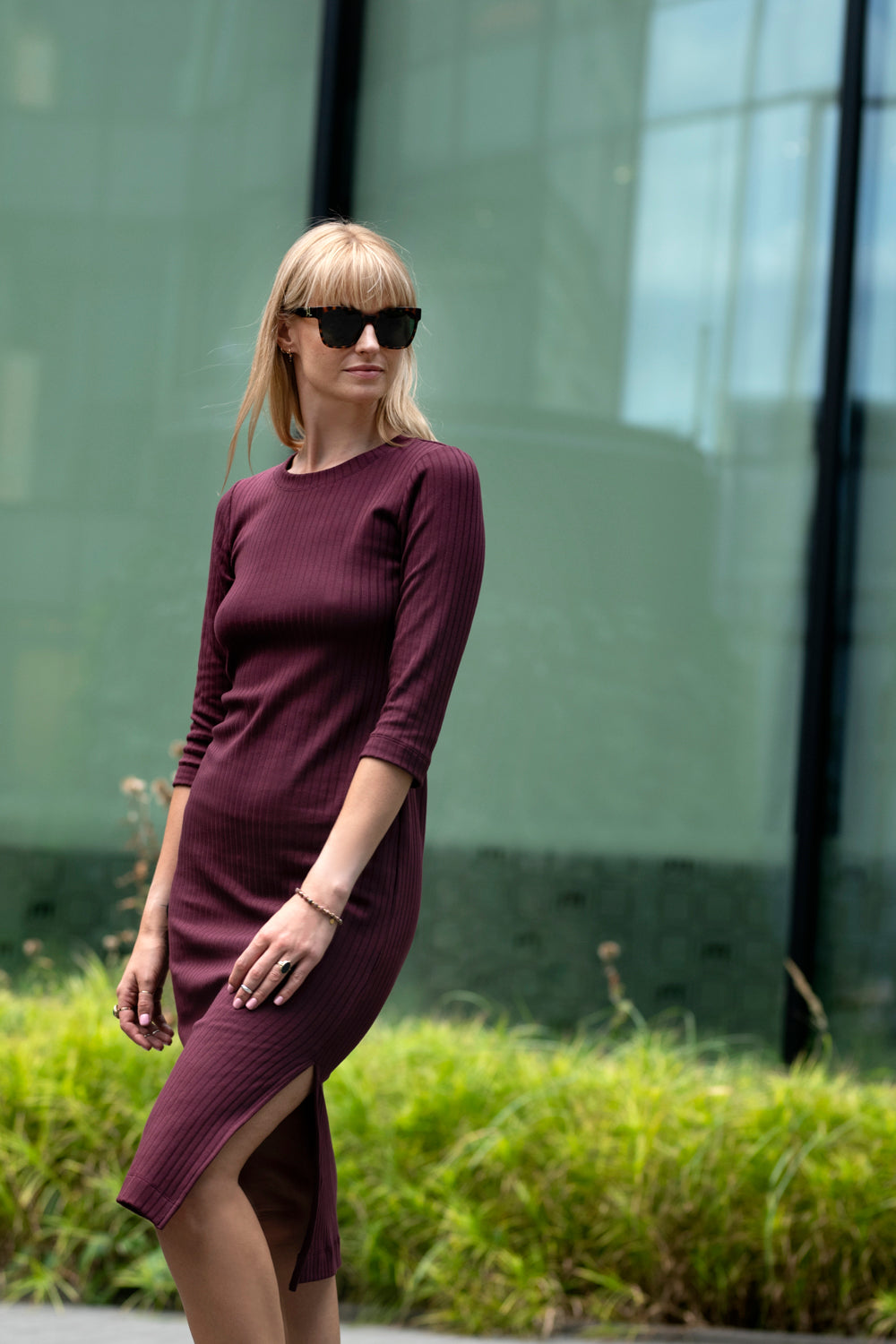
We offer cotton dresses for summer — lightweight, in cuts that don't cling tightly to the stomach — and fitted models made of ribbed knit, which can be worn all year round. Styles include midi lengths, A-line cuts, straight tubes, and fitted turtleneck dresses. The sizing in this category is narrower than in the rest of the store — it doesn't go up to 4XL, and some styles are offered in a limited size range. You can find the full XS–4XL size range in other lines, including the women's dresses category.
The collection is created in a family business run by Katarzyna Pastwa and her family. The same fabric returns to us in subsequent batches, the same cut is sewn in the same workshop — thanks to this, a size 40 that fit well a year ago still fits well now.
Is 100% Cotton Suitable for Dresses?
A 100% cotton dress is breathable, soft, and pleasant to the skin, but it has two drawbacks: it wrinkles easily and loses its shape in bending areas — at the elbows, knees, and along the seat line. Therefore, cotton with a small admixture of elastane (most often 3–5%) is much more frequently used in dresses. Elastane does not change the character of cotton, does not deprive it of breathability, but ensures that the dress returns to its shape after a full day of wear.
At Oh!Zuza, we offer pure cotton in one selected line — for women who value a completely natural composition and accept that the fabric will wrinkle. This is a conscious choice, not a compromise. A 100% cotton dress works well in hot weather, on vacation, for a walk — wherever body cooling is more important than perfectly smooth fabric after an hour of sitting in a car.
Models marked with a composition of 95% cotton + 5% elastane are treated as almost entirely cotton. They retain the character of natural fiber, are soft to the touch and absorbent, but maintain their shape. This is the most versatile option when you are looking for a dress for everyday wear and work.
Ribbed knit with cotton and acrylic constitutes a separate category. This is not a cotton dress in the colloquial sense — cotton makes up about half of the composition here, the rest is acrylic and elastane. Such a composition provides very good shape retention, elasticity, and softness, but less absorbency than a fabric with a predominance of cotton. You can read more about this weave and how it wears in the ribbed knit dress category.
Loose Cotton Dresses vs. Fitted Styles
In our collection of cotton dresses, we have two opposing design concepts: loose, based on flat woven fabric, and fitted, based on elastic ribbed knit. The choice between them depends on whether you want the dress to drape around your figure or emphasize its lines.
Loose cotton dresses are great for summer and when you want the fabric not to cling to your stomach or hips. An A-line cut, a straight tube without a waistband, or a slightly flared hem provide freedom of movement and breathability. This type of dress will forgive a day with a larger meal, a long car journey, and summer temperatures where you don't want to feel fabric against your skin.
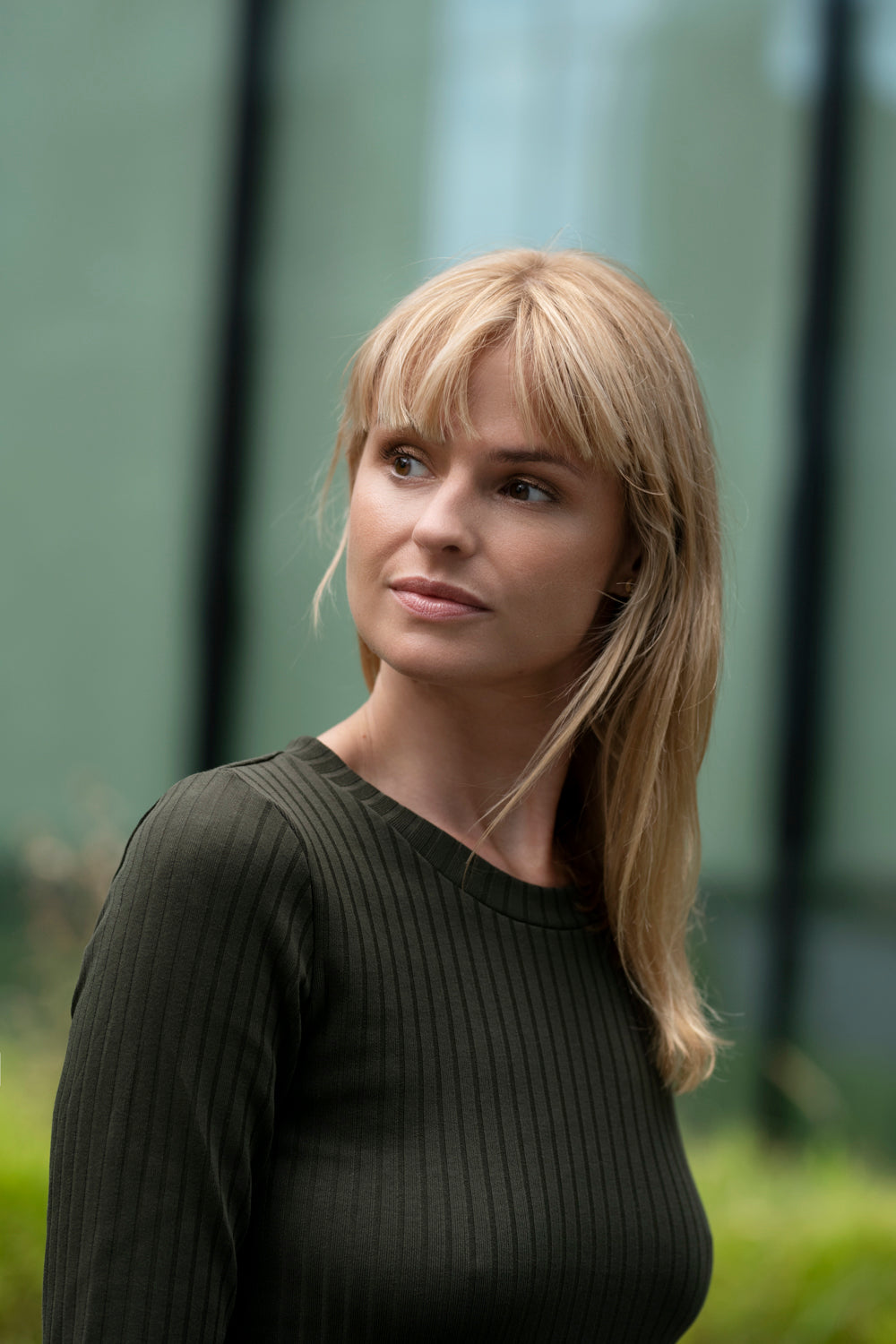
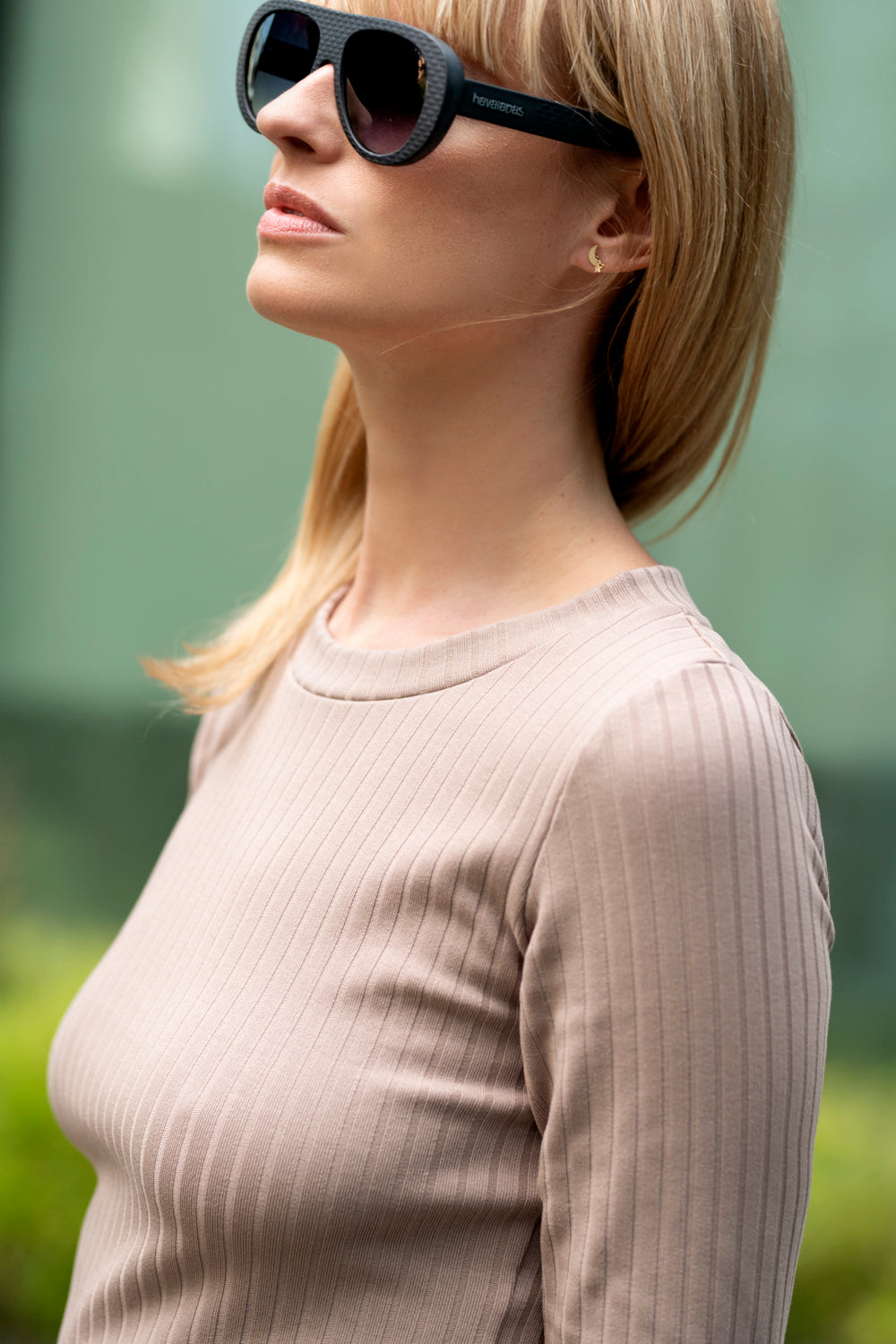
We sew fitted styles from ribbed knit with cotton. The vertical rib subtly slims, and the elasticity of the weave allows the dress to follow the body, not the other way around. This is a good solution for cooler days, for office work, and under a jacket. A fitted style also works well for taller individuals — a midi length in ribbed knit has a chance to look elegant, rather than too casual. Also, check out the women's midi dress category if you're looking for a specific length.
There is no single correct answer to the question of which cut to choose. Practice shows that women who repeatedly buy dresses from us have both versions in their wardrobe — a fitted one for work and cooler days, and a loose one for summer and weekends.
Polish Cotton Dresses — Our Own Workshop in Łódź
Oh!Zuza's Polish cotton dresses are sewn in our own workshop in Łódź, from design to the final stitch. It's a family business run since 2006 by Katarzyna Pastwa with her husband Marek and their three adult children — Zuzanna, Maciej, and Łukasz. Everyone works in the company, each responsible for a different area, and decisions about fabric, cut, and finishing are made among a few people, not on the other side of the world.
A short path from design to finished dress means several specifics for you. If something in a given model needs improvement — a too narrow shoulder line, a hem that curls up when washed — we fix it in the next batch, not in six months. Sizing is consistent: a size 42 dress sewn in spring fits the same as one sewn in autumn, because the same team sews it from the same fabric.
We know where the cotton we sew comes from. We buy fabrics from verified suppliers, and we check their composition and behavior after washing before they enter the collection. This is not an advertisement — it's a natural consequence of the fact that the company sews itself, rather than ordering finished products from an external factory.
Oh!Zuza dresses are bought by customers in Poland, but also in the United States, the United Kingdom, Germany, and about thirty other countries — in a B2B model, through brick-and-mortar stores. The same quality philosophy applies regardless of where the finished dress ends up.
Cotton Dress and Figure and Age
A cotton dress works well on every body type, if you choose the right cut. The fabric itself doesn't slim the tummy, but the construction does: an A-line style with emphasis under the bust, a loose line from the waist down, vertical stripes in the knit, or a wrap cut. All these solutions shift attention from the tummy line to another element — the neckline, the waist under the bust, or the leg length.
For women over fifty, the safest choice is a midi length, at least three-quarter sleeves, and a cut that is slightly fitted at the waist but loose at the hips. Cotton with a small amount of elastane drapes softly, doesn't stiffen at the tummy, and doesn't emphasize what you want to keep to yourself. A muted color — navy blue, graphite, camel, bottle green — works better than intense white or bright pastels.
A cotton dress for a woman aged 30–40 can be fitted in ribbed knit, midi, with or without a turtleneck. The same cut after fifty works well in a version with sleeves and a slightly looser bottom part. It's not about "dressing for your age," but about proportions: what looked great ten years ago might need half a centimeter more in the hip line today.
Sizing in this category is narrower than in other Oh!Zuza lines. We do not go up to 4XL here — for larger sizes, refer to viscose dresses or ribbed knit dresses, where we offer full size charts.
Washing Cotton Dresses
Wash cotton dresses at a temperature of up to 30 °C, on a delicate cycle, in a protective bag or inside out. Do not bleach, tumble dry, or dry clean. Iron with steam at a low temperature — cotton tolerates higher temperatures, but the addition of elastane and acrylic does not, and the label describes the weakest link in the composition, not the strongest.
Hang cotton dresses to dry flat or on a hanger with rounded shoulders. Drying on a radiator or in the sun fades the color and makes the fabric stiff. Dresses with added elastane lose their elasticity if exposed to high temperatures — this is the same principle why they should not be washed at 60 degrees or spun at full speed.
Ribbed knit with cotton and acrylic handles washing particularly well — acrylic is resistant to pilling, and the ribbed weave returns to its shape after drying. A dress with this composition does not require ironing after every wash; simply gently straighten it on a hanger when it is still slightly damp.
Pure cotton wrinkles significantly more after washing than versions with blends. This is not a defect of the fabric, but its characteristic. If you want a dress that you can take out of the washing machine, hang, and wear the next day without ironing, choose a model made of ribbed knit or with an elastane blend. If you prioritize a completely natural composition, be prepared for ironing to become part of your household routine again.
FAQ
Is 100% cotton suitable for dresses?
Yes, but it has its limitations. Pure cotton is breathable, soft, and absorbent, making it suitable for hot weather and everyday wear. However, it wrinkles and loses shape at the knees and in the seat area. Therefore, cotton with a small admixture of elastane is more often used in dresses — it retains its natural character while returning to shape after a full day of wear.
What material are the best dresses made of?
There is no single universally best material — there is fabric suited to its purpose. Viscose is good for summer and evenings out because it drapes beautifully. Cotton with elastane is for everyday and work, as it holds its shape and breathes. Ribbed knit with cotton is for cooler days and under a jacket, as it subtly shapes the figure. It's worth having one dress from each of these groups in your wardrobe.
Which cotton dress slims the tummy?
The best options are an A-line cut with emphasis under the bust, a loose line from the waist down, and a fitted dress with vertical ribs in the knit. In cotton with elastane, wrap styles also work well, as they visually conceal the tummy and draw attention to the neckline. The cut and the placement of the waistline in the dress are more important than the fabric itself.
Which cotton dress for a 50-year-old?
A safe choice is a midi length, three-quarter or long sleeves, a cut slightly defined at the waist and looser at the hips. Cotton with an elastane blend drapes softly, doesn't stiffen on the silhouette, and doesn't emphasize the stomach. Muted colors — navy blue, graphite, camel, bottle green — create a more refined effect than intense pastels or white.
What is the difference between a 100% cotton dress and a cotton knit dress?
A 100% cotton dress is entirely made of natural fiber — it breathes best but wrinkles easily. A cotton knit dress most often contains an admixture of elastane or acrylic, has an elastic weave, and returns to its shape after wear. Ribbed knit with cotton and acrylic is a separate category — it sculpts the figure very well, but is no longer a cotton dress in the colloquial sense.
How to wash a cotton dress?
Wash gently at a temperature of up to 30 °C, do not bleach, do not tumble dry, and do not dry clean. Iron with steam at a low temperature, and dry the dress flat or on a hanger with rounded shoulders. High temperatures reduce the elasticity of blends, which is why the label describes the weakest link in the composition, not the cotton itself.

OWN, LOCAL SEWING WORKSHOP

SUSTAINABLE MATERIALS

RESPONSIBLE PRODUCTION

FAMILY COMPANY

100% POLISH PRODUCTION