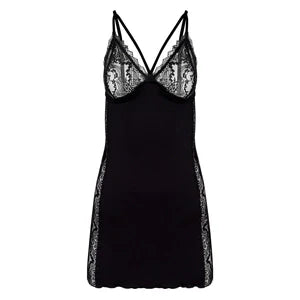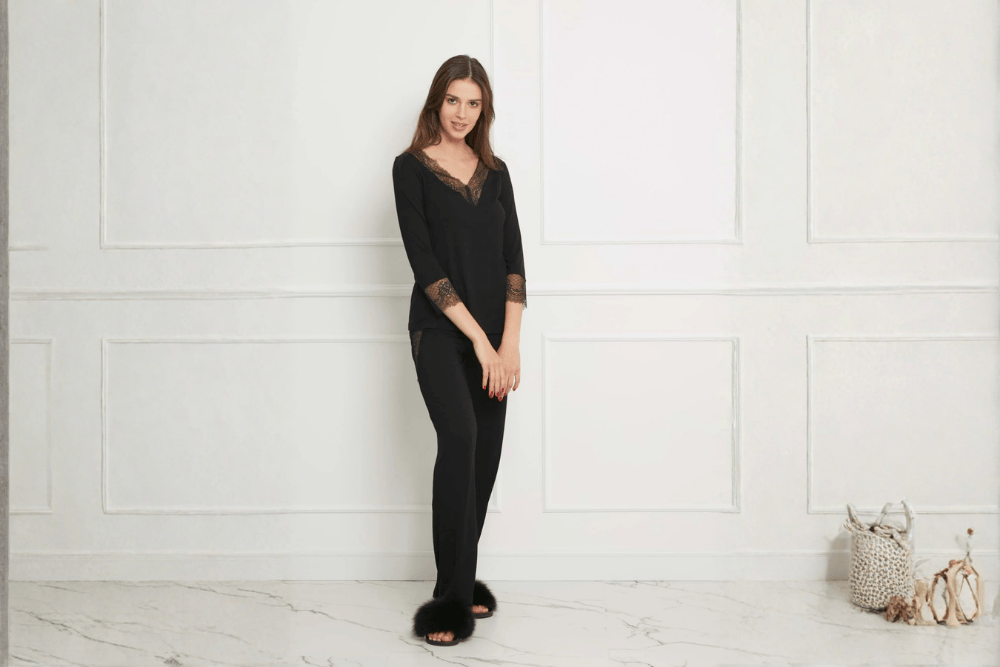
Lace in pajamas can look beautiful, but comfort determines whether you'll reach for it every night. If you have sensitive skin, it's easy to experience a scenario where, after a few minutes, you feel a "scratching" sensation on your thighs, under your bust, or around your waist, and your sleep becomes less restful. The good news is that this problem can be largely eliminated—the key lies not in the lace itself, but in its finish, whether it's lined, how it responds to body movement, and exactly where it's sewn. In this guide, I'll guide you through specific design details that truly impact softness and irritation-free comfort, so you can choose pajamas with lace that simply won't interfere with your sleep.
- How to check if lace in pajamas will be scratchy?
- Finishes and seams – details that make the difference
- Lace underlay – when is it necessary?
- Lace elasticity and sleeping comfort
- Where is the sewing of lace most important?
- What should you pay attention to when choosing pajama material?
- How to care for lace pajamas to keep them soft?
How to check if lace in pajamas will be scratchy?
The problem with "scratchy" lace is most often not its appearance, but rather how it's designed and sewn . It's the subtle details—the edge finish, the type of thread, the presence of lining, or the elasticity—that determine whether you'll experience discomfort after a few minutes. Before choosing a style for yourself, consider the following:
-
Left side of the lace (the one next to the skin)
This is where the lace comes into direct contact with the body. If you already feel roughness, micro-ridges, or "hooking" when you touch it, there's a good chance it will be even more noticeable around the waist, thighs, or under the bust. Soft, high-quality lace should be smooth on the underside. -
Edge finishing
Often, it's not the pattern itself that causes irritation, but rather the hard finishing tape or too stiff a thread reinforcing the lace's wave. The best styles are those with a delicate, elastic hem that conforms to the body rather than sticking out. -
Material flexibility
Lace in nightwear should move with the body. If it's too stiff, it will shift and chafe as you change positions in bed. A flexible, slightly stretchy structure significantly reduces the risk of discomfort. -
Undercoating in sensitive areas
If lace is found along the sides of the pants, at the neckline, or on the back, a thin layer of soft material underneath can completely eliminate the scratchy feeling. This is especially important for sensitive skin. -
Sewing method and seam quality
Raised, hard seams or rough interior threads are a common cause of irritation. The most comfortable models have flat, carefully finished seams that are almost imperceptible during movement.
In practice, the safest choice is one in which the lace serves as a delicate finishing touch , rather than a structural element that stretches the material. If you have very sensitive skin, it's also worth checking out our guide to the best pajamas for allergy sufferers and those with sensitive skin , where we discuss ingredients and friendly finishes.
A good test is to try it on "in motion": raise your arms, sit down, lean forward, and twist your torso. Lace that's comfortable only when standing may only become irritating during natural movements during sleep —and that's when its quality is most important.
Lace underlay – when is it necessary?

Lining is one of those details that can be invisible in photos, but in practice, it makes a huge difference in comfort . If the lace is intended to touch the skin directly, even a delicate texture can cause a scratchy sensation or slight redness after a few hours. The soft layer underneath acts as a buffer: it stabilizes the lace, reduces friction, and allows the whole thing to fit better.
Lining is especially recommended when the lace is located in places that are subject to heavy use during sleep or are sensitive to irritation:
- at the waist and hips – where the material bends when sitting and changing position,
- on the thighs (stripes, side inserts) – when rubbing against the bedding and the other leg,
- in the armpit and underbust areas – when the skin is delicate and sweats easily,
- on the back – because at night we often “slide” across the sheet, and the lace may then rub in places.
It's worth remembering, however, that the lining shouldn't be haphazard. Ideally, it should be made of a smooth, soft material that doesn't create an additional "layer of seams" on the inside. If the lining is too thick or poorly sewn, it can have the opposite effect: it starts to roll or form a fold, which is more of a nuisance than the lace itself.
Another good sign is that the lining covers not only the lace itself but also its edges – this way, the leather doesn't come into contact with the harder finish. This is why, in comfortable models, the lace is often "softened" structurally, rather than left as a raw, decorative element.
If you're looking for pajamas in which lace serves as a striking detail but isn't meant to be irritating at night, women's pajamas with lace are a good choice – in many styles, key areas are designed to make the lace look light and yet feel comfortable against the skin.
Lace elasticity and sleeping comfort
Lace elasticity is one of the most important factors if you want your pajamas to be comfortable at night. Your body works during sleep: you change position, pull your legs up, turn to the side. If the lace is too stiff, it begins to act like a "barrier"—it doesn't follow your movements , but instead stretches, sticks out, or chafes the skin in places. The effect can be insidious: everything looks great while standing, but discomfort only appears after a few minutes in bed.
In practice, the most comfortable lace is one that has at least minimal elasticity and can return to its shape without digging into the body. This means that when the pajama fabric drapes differently when sitting or lying on the side, the lace doesn't "pull" on the seam and create tension in sensitive areas. This is especially important at the neckline, waistband, and side panels of pants—where any lack of elasticity quickly translates into chafing.
It's also worth noting the difference between the lace itself and what it's connected to. Even if the lace is soft, it can be indirectly scratchy when sewn into a material with a different "work"—for example, when the body fabrics and knits are more flowing and the lace is stiff. Then the connection begins to "resist" every movement, and the skin feels this as friction. Therefore, styles that offer a consistent comfort throughout work best: a soft base material and lace that adapts to it rather than fighting it.
If you're looking for maximum softness, women's viscose pajamas are often a good choice, as this material promotes lightness and a pleasant feel on the skin—and with well-chosen, elastic lace, the risk of itching is significantly reduced. When choosing a model, consider elasticity as a real comfort parameter: lace should look beautiful, but above all, it shouldn't be intrusive .
Where is the sewing of lace most important?
Even soft, flexible lace can become irritating if it's sewn into an area that gets a lot of work at night. This is why two models can look similar but feel completely different: it's not just the quality of the lace that matters, but also the placement of the inserts and how they connect to the fabric . The closer the inserts are to friction or bending points, the greater the risk of irritation—especially if you sleep on your side or frequently change positions.
Lace placed in three different places makes the most difference. First, the waist and hip area. This is where the pajamas "work" when sitting, turning, and with the natural movement of the abdomen. If the lace is placed on the waistband or along the line that's supposed to keep the pants in place, it can cause discomfort more quickly than lace on the sleeve. Second, the thighs —especially the side panels and side stripes. This is where friction against the bedding and the other leg occurs, so even the delicate texture of the lace can be felt after a few hours. Third, the neckline, armpits, and the area under the bust , where skin is sensitive and more prone to moisture and chafing.
That's why in comfortable designs , you'll often find lace treated as a soft finish (e.g., at the cuff or neckline), rather than a "supporting" element. If lace appears on the sides of trousers or the bottom of a blouse, it's crucial that the seam is flat and that the base fabric doesn't "pull" the lace during movement. The most comfortable designs are those in which the lace lies smoothly, doesn't wavy, and doesn't create hard spots along the seam.
If you like lace details on the legs or along the side lines, pay attention to the construction of solutions such as the long pajamas with lace stripes - red wine - in such styles, it is the way the stripes are sewn on that determines whether the whole thing will be "soft to the touch" even after a few hours of sleep.
What should you pay attention to when choosing pajama material?
Even the best-designed lace won't fulfill its purpose if the base material is too stiff, heavy, or not breathable. The fabrics and knits from which the pajamas are made largely determine whether lace becomes a delicate accent or a source of discomfort. The key factors here are the softness, elasticity, and ability of the material to adapt to the body's movements .
| Material | Why is lace comfort-enhancing? |
|---|---|
| Viscose | Soft, breathable, and pleasant to the touch, it drapes well and softens the feel of lace against the skin, especially when worn with sleepwear. |
| Viscose satin | Smooth and slippery against the skin, it reduces friction. Unlike classic synthetic satin, it is more breathable and comfortable in contact with the body. |
| Silk | Very delicate and luxurious in feel. Naturally cool and light, it makes even more decorative lace less noticeable. |
Women's viscose pajamas are particularly effective in practice, as the material is soft, breathable, and flexible. When lace is combined with flowing viscose, the whole thing works harmoniously, without any unpleasant "pulling" when changing positions.
If you're looking for a more elegant, smooth look, consider viscose satin styles, such as the Bliss Women's Pajama Set with Long Pants, Viscose Satin – Black . Viscose satin differs from classic satin in that it's more skin-friendly and less "plastic" to the touch , which is crucial when paired with lace inserts.
For those who appreciate exceptional lightness, women's silk pajamas are also an interesting option. Silk combined with carefully selected lace creates a subtle effect without feeling stiff. Regardless of the material chosen, it's worth remembering: the softer and more breathable the base, the less risk the lace will become uncomfortable at night .
How to care for lace pajamas to keep them soft?

Even the most delicate lace can become rough over time if not cared for properly. High-quality craftsmanship is essential, but washing and drying methods determine whether pajamas will still be pleasant to the touch after several months. Especially with viscose and viscose satin styles, it's worth treating fabrics and knits gently to maintain their softness and elasticity.
- Wash at low temperatures (30°C) – higher temperatures can stiffen the fibers and make the lace rougher.
- Choose a delicate program and low speed – intense spinning causes tension in the places where the lace is sewn in.
- Use mild detergents – without strong enzymes and bleaches, which can weaken the structure of the material.
- Wash in a protective bag – this will reduce friction with other items of clothing and reduce the risk of lace getting caught.
- Dry flat or on a hanger – avoid tumble drying, which can cause stiffness and deformation of delicate inserts.
It's also worth remembering that good quality material is a long-lasting investment. In the models available at Oh!Zuza, a fashionable women's lingerie store , attention to detail ensures the lace retains its shape and softness even after many washes—provided it's cared for properly.
If you're looking for a combination of comfort and subtle details, choose styles with carefully finished lace that's sewn in to minimize friction. Well-chosen and properly cared for , sensual nightwear can be both striking and completely comfortable—without any itching, even on sensitive skin.
864 rows not modified.