Type:
Echo Viscose Midi Skirt with Pockets – Blue Print


Type:
Echo Viscose Midi Skirt with Pockets – Pink Print


Type:
Echo viscose midi skirt with pockets – raspberry print


Type:
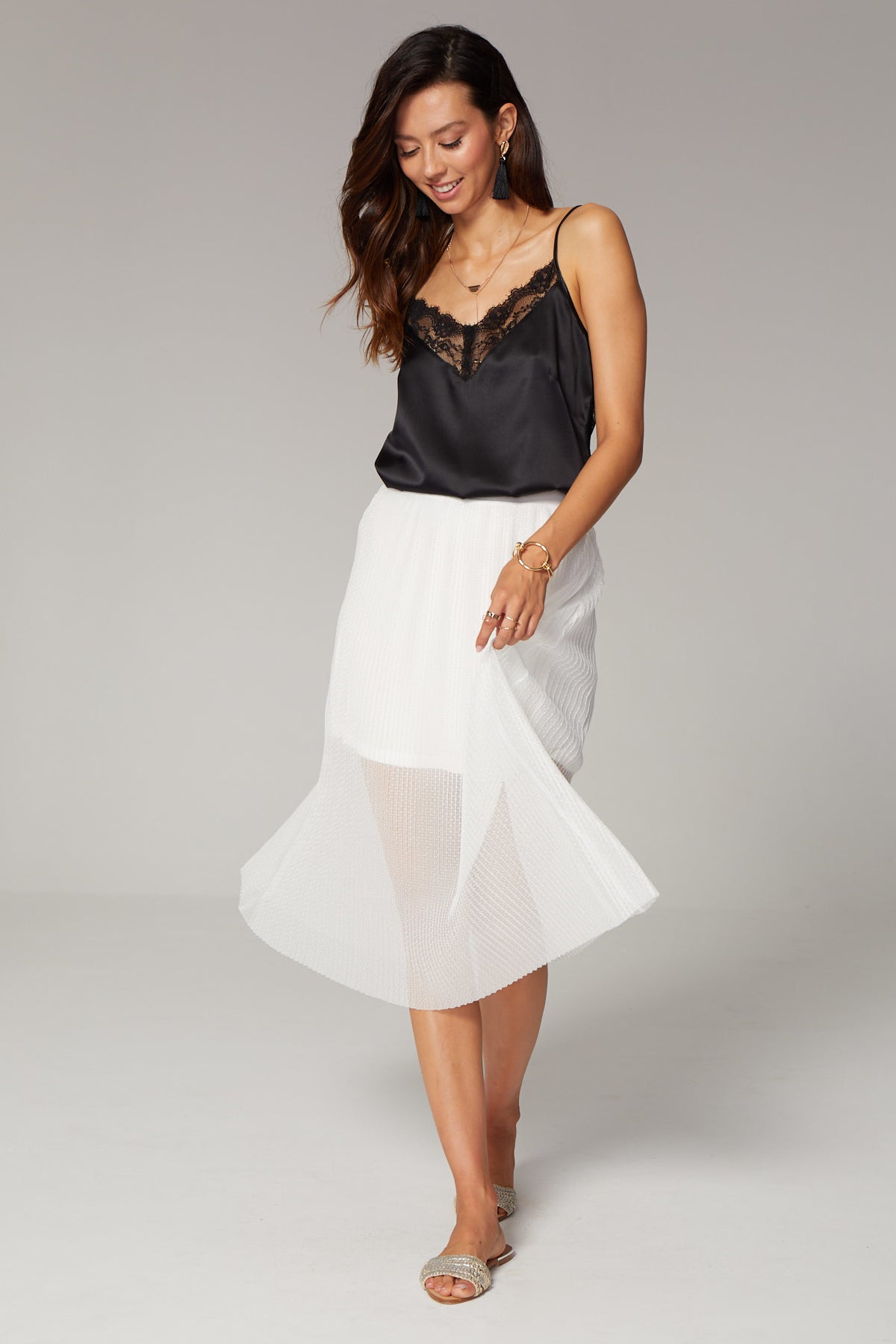
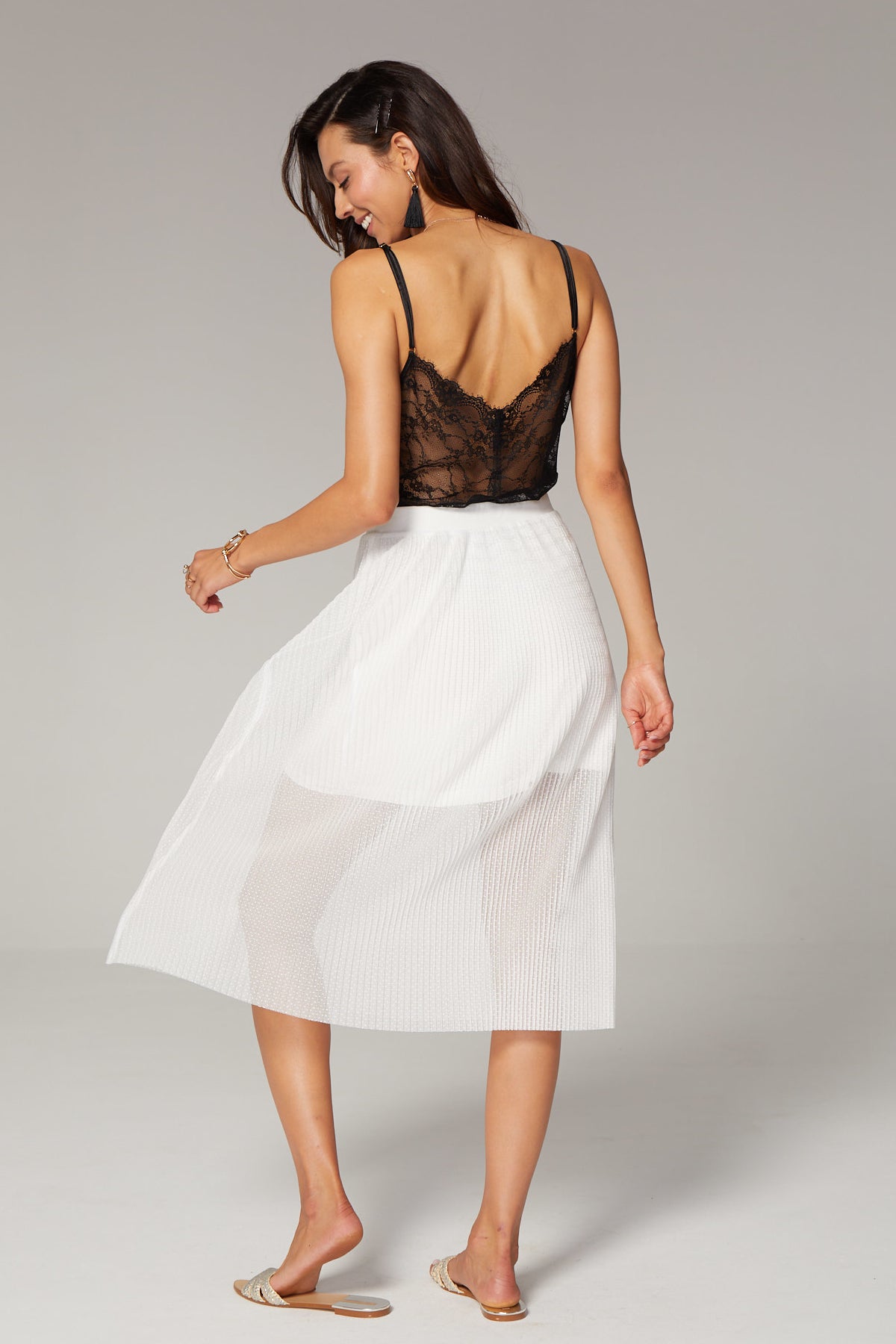
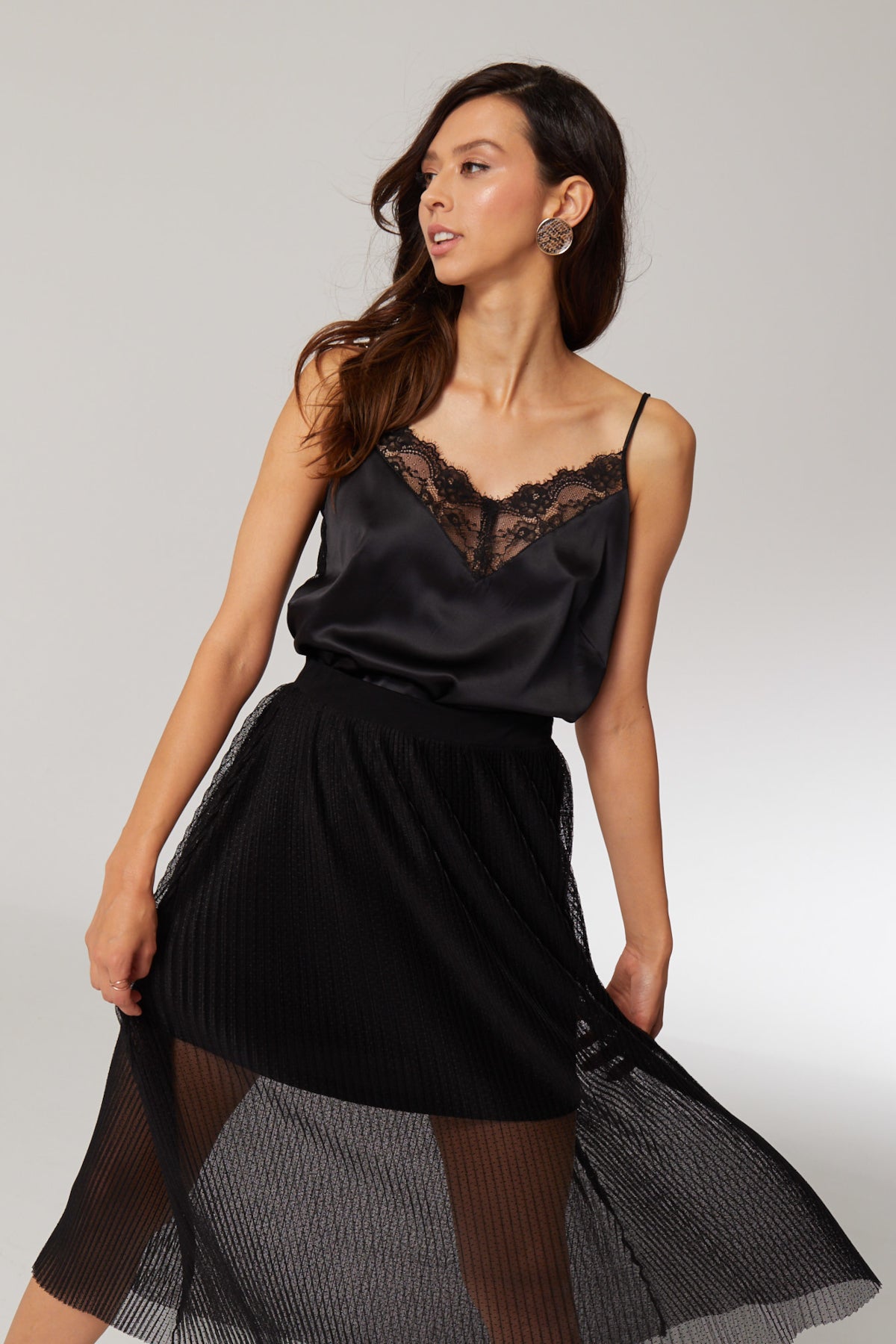
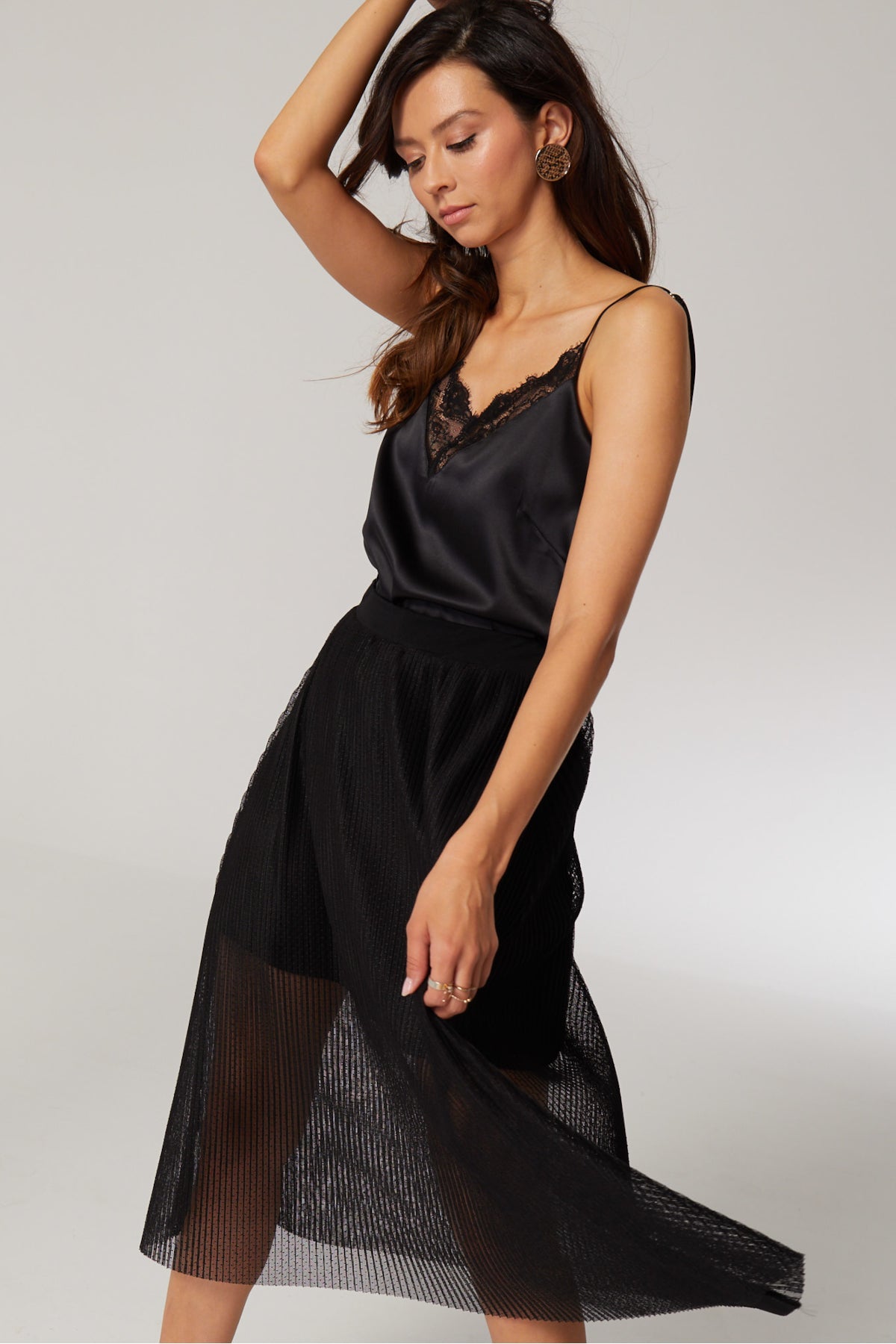
Double-layered pleated midi skirt – cream


Type:
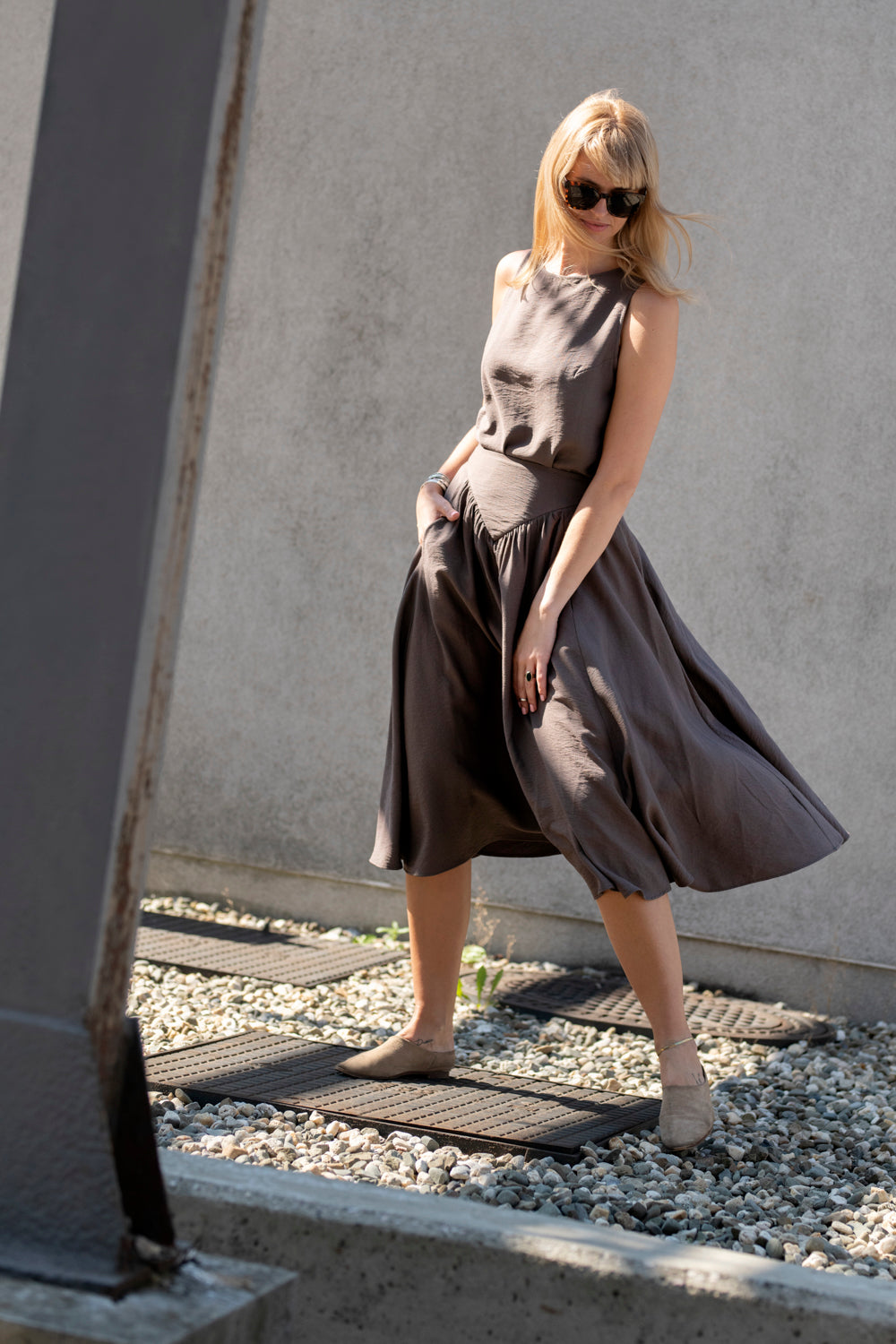
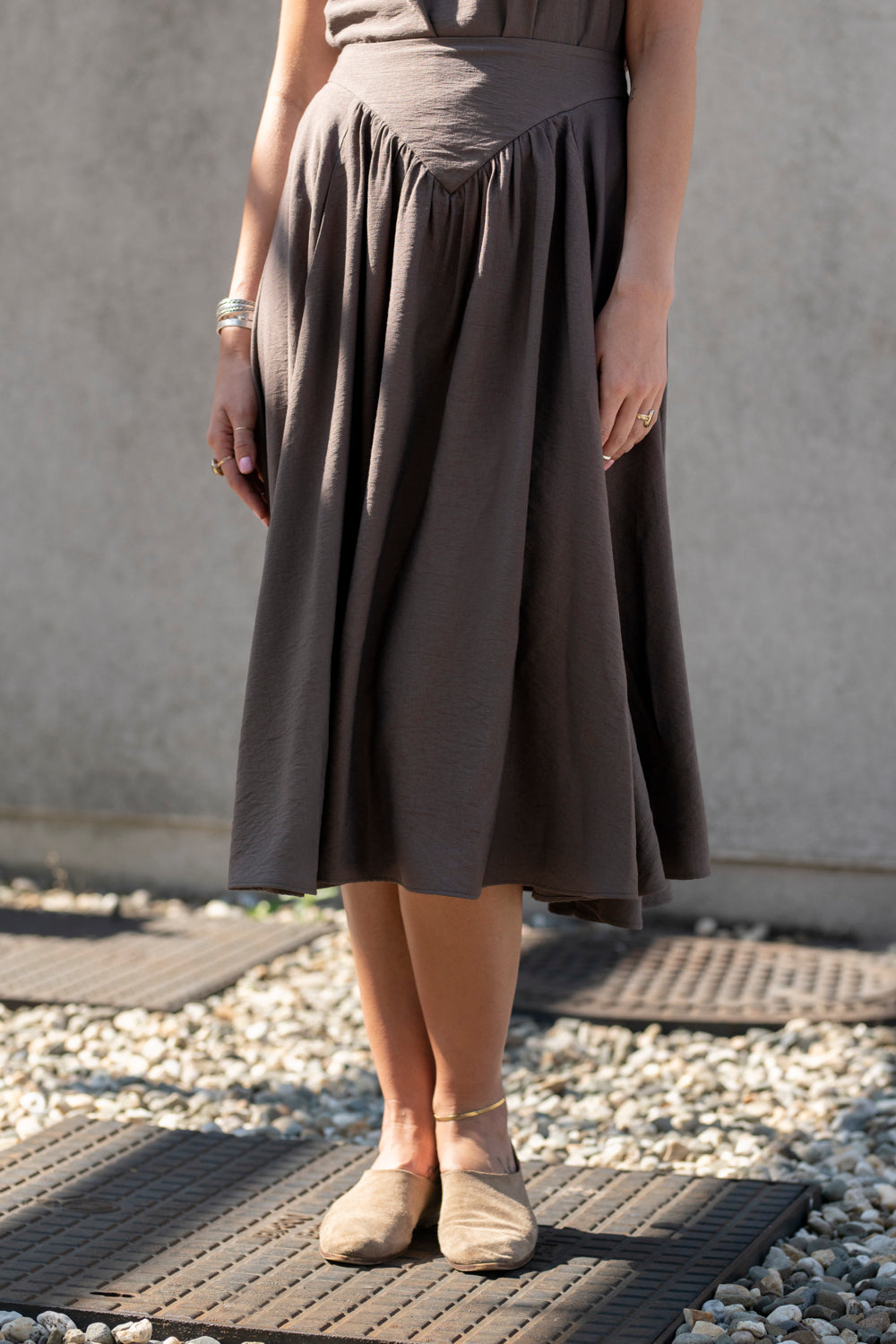
Loose viscose skirt with pockets – olive green
Midi skirts for everyday, work, and going out
Midi skirts at Oh!Zuza are flared styles, reaching roughly mid-calf, made from soft viscose in our sewing workshop in Łódź. This is a proposition for women who want one item that fits both the desk, an afternoon coffee, and an evening out — without the need to change between activities.
The category is based on one recurring idea: a flared cut with a yoke highlighting the waist, hidden pockets, and a fabric that drapes softly around the legs. The style is neither pencil nor A-line in the classic sense — it's a skirt slightly widened from the waist, with subtle gathers and a concealed zipper at the back.
The Echo line dominates the collection, available in solid colors and floral patterns, alongside models with an elastic waistband and asymmetrical gathers. All share one principle — they are designed to fit well regardless of whether you wear them with a shirt, a T-shirt, or a long-sleeved blouse.
The Oh!Zuza brand has been operating as a family business since 2006, and the skirts are made in the same Łódź sewing workshop where we sew nightwear and the rest of our women's clothing. This means a short path from the first stitch to the alteration, repeatable sizing, and fabrics whose origin we know.
What are midi skirts?
Midi skirts are models that end approximately at mid-calf — below the knee, but clearly above the ankle. This is an intermediate length between mini and maxi, and most elegant, classic skirt cuts fall within this zone.
The abbreviation "midi" comes from the word middle. It doesn't denote a specific number of centimeters, but a proportion: the length should stop at the calf, at its widest or slightly lower point. Therefore, the same midi skirt on a shorter woman ends closer to the ankle, and on a taller woman — slightly above mid-calf. The cut remains the same; the point of reference is always the calf.
Midi differs from 3/4 length subtly, yet noticeably. 3/4 ends lower — closer to the ankle, in the lower part of the calf — while midi stops higher, in its middle part. In practice, this means that midi exposes more of the leg and pairs better with lower heels and flat shoes, while 3/4 looks more evening-appropriate and usually requires a higher shoe.
If you're looking for a similar silhouette, but in a dress version, alongside the skirt category, we also offer women's midi dresses — from the same length family, with the same design philosophy.
Flared midi skirt — what kind of cut is it?
The flared midi skirt is the main style in this category. In Oh!Zuza's construction, the flare begins with a V-shaped yoke that enters the waistline, gently accentuating it, and from the yoke, the skirt widens with soft gathers, falling freely to mid-calf.
The V-yoke is a detail that does more than meets the eye. Instead of a horizontal waist seam line, you get a line directed downwards and inwards — this optically elongates the torso and narrows the waist, without cutting off the silhouette at the hips. Therefore, flared midi skirts with a V-yoke work well for a rounded belly and wider hips — the widening at the bottom balances the proportions, and the waist gains a distinct accent.
The fastening is at the back, in the form of a concealed zipper. There is no visible waistband or large buckle, so you can wear a blouse tucked into the skirt or a loose one left untucked. The flared bottom pairs well with fitted tops — for example, elegant women's blouses with short or long sleeves — because the classic proportion of this cut is a narrower top and a wider bottom.
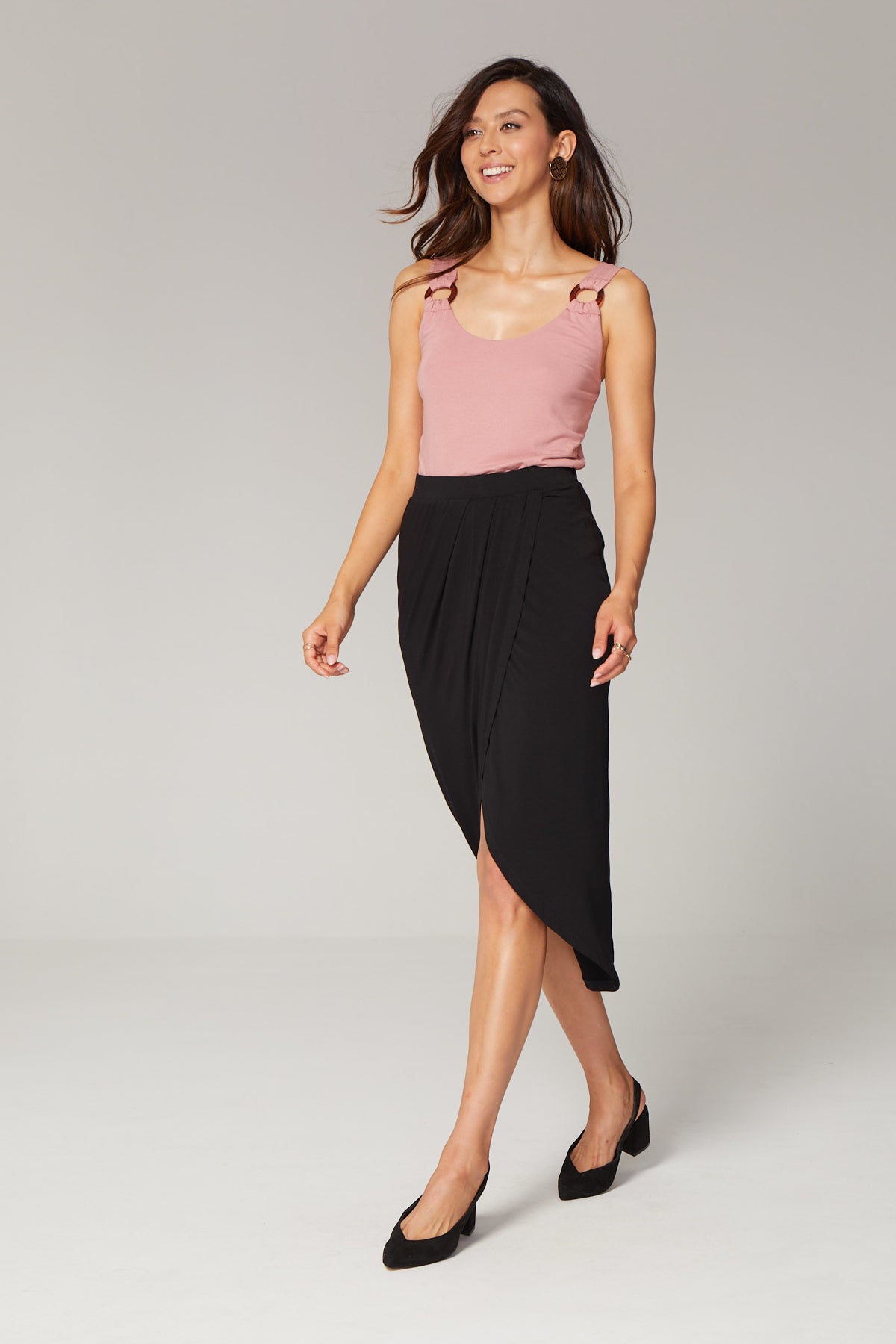
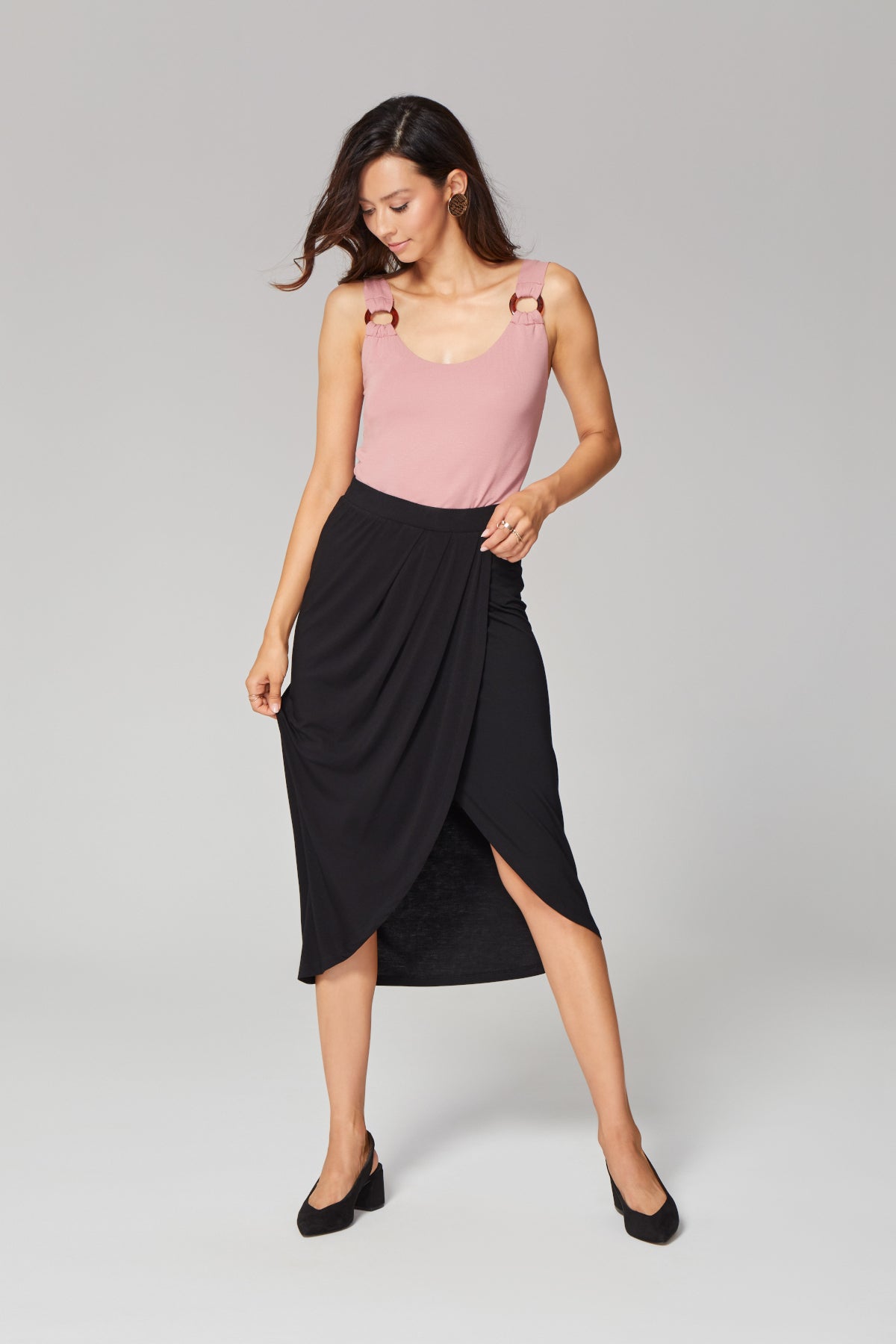
The collection also includes an asymmetrical version with an elastic waistband and front gathers. It's the same idea — a loose bottom and an accent on the waist — just in a less formal version, without a zipper, to be pulled on over the head or legs.
Midi skirt with pockets — where are the pockets?
A midi skirt with pockets is one of the most frequently chosen models in this category. At Oh!Zuza, we use two ways of sewing in pockets: pockets in the front yoke cuts and pockets in the side seams. Both versions are hidden — from the outside, the skirt looks smooth, without flaps or attached elements.
The pockets in the front cuts are found in the Echo model. They are located below the V-yoke line, roughly at hip height, and are deep enough to hold a phone or keys without distorting the pockets. Because they are placed diagonally, they do not bulge on the abdomen when you reach into them.
Pockets in the side seams are a classic solution, present in the looser viscose skirt with an elastic waistband. They are even less visible than those in the cuts — the opening runs vertically, along the hip line, and blends into the draping fabric. This is a practical version, good for everyday use when you want to have your hands free.
A flared midi skirt with pockets differs from a model without pockets in one thing that is hard to appreciate until you have it: freedom. You don't have to carry a handbag for a walk, to a cafe, after work. The pockets in our design do not spoil the line — because they are set into the seam or cut, not sewn on the outside.
Viscose midi skirt — what we sew from
The viscose midi skirt is the foundation of this category — we chose viscose because it drapes softly, breathes well, and falls beautifully from the yoke, giving the flared style a light, flowing movement. The composition is based on viscose — sometimes blended with a small addition of nylon, sometimes with elastane.
Viscose with added nylon (most often 85/15) is found in the Echo line. Nylon gives the fabric elasticity and makes the skirt better retain its shape after a full day of wear. The surface is matte, with a cool, slightly rough linen-like feel — but it is still viscose, not linen fabric. The "linen feel" effect comes from the weave and finish, not the composition.
Viscose with elastane (93/7) appears in models with an elastic waistband — asymmetrical and loose with side pockets. Elastane adds minimal stretch, which is important for a drawstring waist and in areas where the fabric needs to yield to movement.
Viscose handles summer well because it doesn't cling to the skin and breathes better than most synthetic fabrics. That's why a midi skirt for summer in this category is most often viscose in a light color or a floral pattern — light, airy, and non-overheating. If you are looking for a similar material in a different form, also check out our women's skirts in other cuts of the parent category.
Black and elegant midi skirt for work
The black midi skirt is the most versatile color in this category — we permanently offer black in the Echo line, so this variant is not seasonal. It's a model that looks like a classic base in the office, and in the evening — after changing the top — becomes part of an outing outfit.
An elegant midi skirt for work is most often a combination of three things: a subdued color, a flared but not ostentatious cut, and a non-shiny fabric. The matte viscose from the Echo line meets all three conditions. With a shirt or a long-sleesleeved blouse, it creates a silhouette that fits a formal dress code — without the stiffness typical of pencil cuts.
Besides black, we offer earth tones (cocoa) and floral patterns on blue, pink, and raspberry backgrounds in this line. Patterns work well in less formal settings and warmer seasons, while solid black works all year round.
For an office outfit with a midi skirt, low-heeled pumps, loafers, and ballet flats are suitable, and in autumn — ankle boots with short shafts. If you are looking for a similar aesthetic in a different texture, our offer also includes women's tulle skirts in a pleated version — with a different character, but in the same midi length.
Washing and durability of a viscose skirt
Wash a viscose skirt at 30°C on a delicate or synthetic fabric program, turning it inside out. Do not use bleach, do not tumble dry, and do not iron at high temperatures. These four rules are enough for the skirt to maintain its color and softness for many seasons.
Viscose is a natural fabric in the sense that it is made from cellulose — and like other cellulosic fibers, it does not tolerate high washing and drying temperatures well. Hot water and tumble drying cause shrinkage and loss of softness. Tumble drying is the main reason why viscose items stop fitting after a few washes — not washing itself, but drying.
The best drying method is to lay the skirt flat or hang it on a hanger without clips, in a well-ventilated place protected from the sun. The fabric regains its shape as it dries and usually only requires light ironing after drying — at a low temperature, through a thin cloth, or with steam.
If you are washing a skirt with a concealed zipper, it is advisable to zip it up before washing — this prevents the teeth from catching on other items in the drum and stretching the seam into which they are sewn. Put the skirt in a laundry bag if you are washing it with clothes that have hard elements (buttons, hooks, buckles).
Midi skirt sizing at Oh!Zuza
Midi skirts are available in sizes from XS to XL. This is Oh!Zuza's standard sizing for bottoms, based on three measurements: bust, waist, and hips. For skirts, the latter two are crucial — bust measurement is irrelevant in this category.
For size XS, the waist ranges from 64–68 cm, hips 88–92 cm. S is waist 68–72 and hips 92–96. M — waist 72–78, hips 96–102. L — waist 78–84, hips 102–108. XL — waist 84–92 and hips 108–116. If your measurements fall between two sizes, it's safer to choose the larger one for flared skirts — the cut allows freedom at the bottom, and the waist is the most important part.
In models with an elastic waistband (loose viscose and asymmetrical lines), the size has a greater tolerance than in models with a concealed zipper, where the waistband is rigid. For concealed zippers, it's worth measuring your waist precisely and comparing it with the table, as this construction does not compensate for differences with elasticity.
The Oh!Zuza midi skirt is sewn in the same Łódź sewing workshop where the rest of the collection is made, so the sizing is consistent between deliveries. If you know your size from another Oh!Zuza skirt or dress, the same size will likely work for a new model.
FAQ
What are midi skirts?
Midi skirts are models with a length reaching approximately mid-calf — below the knee, but clearly above the ankle. This is an intermediate length between mini and maxi. The point of reference is the calf, so the same midi skirt will end slightly higher on a taller woman than on a shorter one.
What does the abbreviation MIDI mean?
The word "midi" comes from the English middle, meaning "middle," and denotes a medium, intermediate length for a skirt or dress. It does not refer to a specific number of centimeters, but to a proportion — the bottom of the garment should stop around mid-calf, between mini and maxi.
Which skirt model is slimming?
A flared midi skirt with a V-shaped yoke and in a subdued, dark color — for example, black — has a slimming effect on the figure. The V-yoke elongates the torso and narrows the waist, while the widened bottom balances wider hips and a rounded belly, without accentuating their lines.
What skirts are fashionable now?
Styles that are not dependent on a single season work best — flared midi skirts made from natural fabrics, in subdued colors and classic floral patterns. This is a cut that returns year after year because it fits various body types well and integrates with the rest of the wardrobe without forcing a new style.
Is a viscose midi skirt suitable for summer?
Yes, viscose is one of the best fabrics for summer — it breathes well, doesn't cling to the skin, and drapes beautifully. The flared cut additionally provides air circulation around the legs, making a viscose midi skirt lightweight even on hot days.
How to wash a viscose skirt?
Wash a viscose skirt at 30°C on a delicate cycle, turned inside out. Do not use bleach, do not tumble dry, and iron at a low temperature. Dry flat or on a hanger, in a place sheltered from the sun — the fabric will regain its shape during drying.

OWN, LOCAL SEWING WORKSHOP

SUSTAINABLE MATERIALS

RESPONSIBLE PRODUCTION

FAMILY COMPANY

100% POLISH PRODUCTION