Choosing the right bra size can be frustrating – especially when one model fits perfectly, but another in the same size doesn't work at all. This is where the concept of sister sizes comes in, which for many women is a real breakthrough in lingerie fitting. Thanks to them, you can find an alternative size that will fit just as well – and sometimes even better. Skillfully using this knowledge not only increases wearing comfort but also allows for conscious selection of lingerie tailored to your figure and made of high-quality materials, such as soft and breathable viscose.
What are sister sizes?
Sister sizes are alternative bra sizes that, despite differences in number and letter, have a very similar cup volume. In practice, this means that if your standard size doesn't provide a perfect fit, you can opt for its "equivalent" that will sit better on your body.
This solution stems from bra construction – size consists of two elements: underbust band (e.g., 70, 75, 80) and cup size (A, B, C, D, etc.). When you change one parameter, the other must be appropriately adjusted to maintain the same cup volume. This keeps the proportions balanced, and the lingerie continues to fulfill its function.
For example: if you wear size 75C, its sister sizes are 70D (tighter band, larger cup) and 80B (looser band, smaller cup). Although the labels differ, the actual "capacity" of the bra remains very similar.
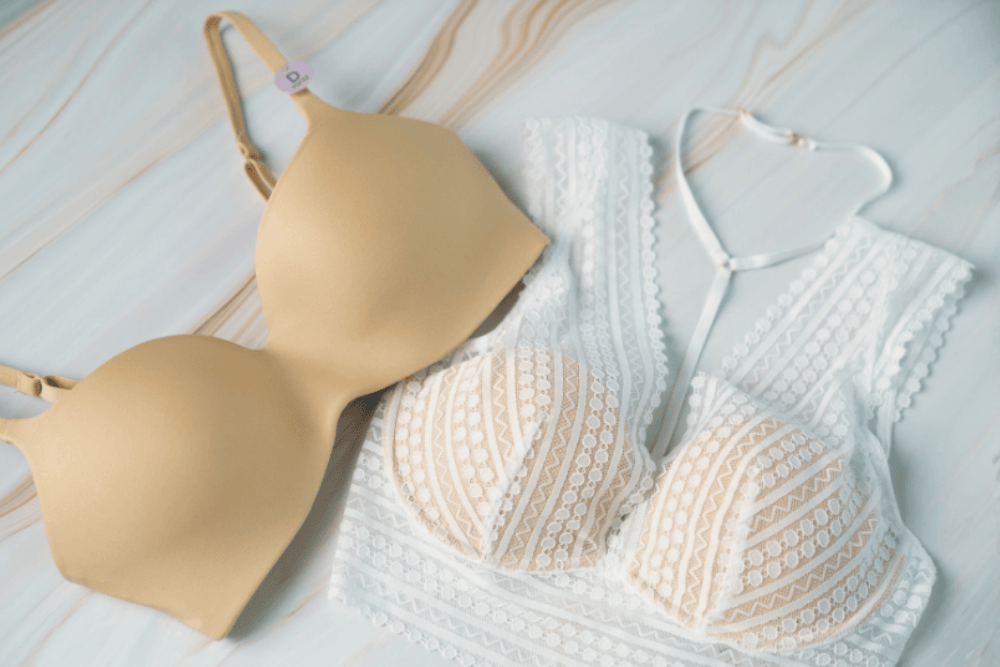
It's worth remembering that different lingerie styles may fit differently on the figure. Delicate bralettes often require a slightly different fit than classic underwired models, just like more form-fitting strappy bodysuits, which must perfectly align with the body's lines. In such situations, knowing sister sizes greatly simplifies the selection process.
Why is it worth knowing sister sizes in practice? Because they allow you to consciously adapt lingerie to your figure and avoid the most common comfort issues. Specifically:
- they enable matching the bra to various styles and model constructions,
- they facilitate online shopping when you can't try on lingerie,
- they help find the ideal fit for differences in body build,
- they increase wearing comfort and stability throughout the day.
Conscious use of this knowledge makes choosing fashionable women's lingerie much simpler. High-quality models – especially those made of modern, soft materials like viscose – fit the body better, and a properly chosen size allows you to fully exploit their potential.
How do sister sizes work in practice?
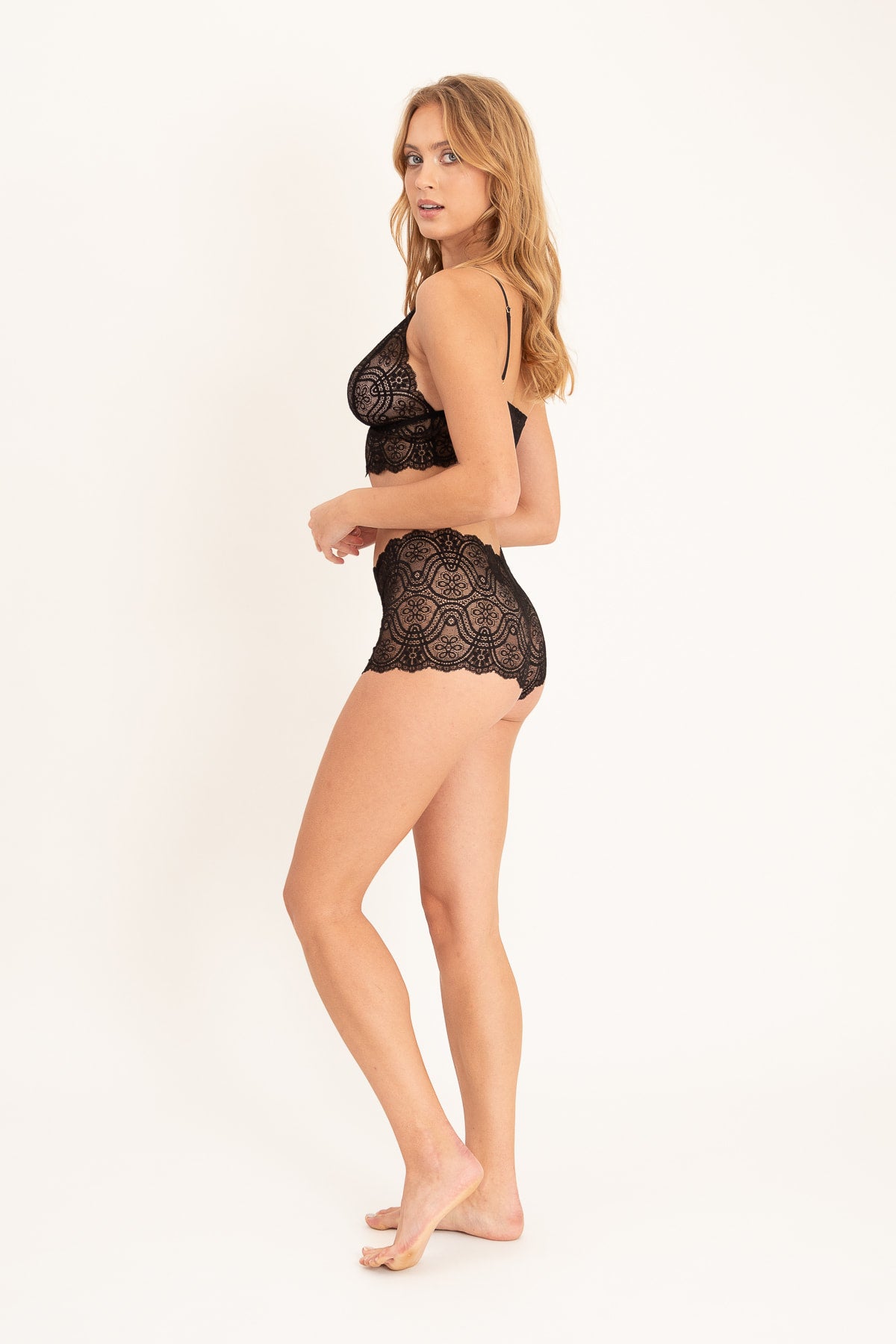
In theory, sister sizes sound simple, but their true value emerges only in practice – especially when trying on various lingerie models. Each style can sit differently on the body, so the same size will not always yield identical results. That's when it's worth reaching for its "sister" alternative.
The most common situation? The band is too tight, but the cup fits the breast well. In this case, instead of giving up on the model, it's better to increase the band size and simultaneously decrease the cup size – this will maintain proportions and make the lingerie more comfortable.
Analogously, it works the other way around – if the band is too loose and doesn't provide adequate support, you can choose a smaller band size and a larger cup size. This is particularly important for models that are meant to provide stability while remaining light and comfortable.
In practice, this means that you shouldn't be limited to just one size. Modern fashionable women's lingerie is designed with various body shapes in mind, so it often requires a more flexible approach to fitting. This applies not only to bras but also to items of clothing such as fashionable women's bodysuits, which must perfectly align with both the band and torso length.
It's also worth paying attention to the materials – high-quality materials, such as soft and elastic viscose, adapt better to the body, but at the same time require precise size selection. This ensures that the lingerie not only looks aesthetically pleasing but, most importantly, provides comfort throughout the day.
Conscious use of sister sizes thus allows treating sizing as a tool, not a limitation – which significantly increases the chance of finding a model that truly "fits like a second skin."
When should you opt for a sister size?
Sister sizes are especially useful in situations where your standard size "almost" fits, but doesn't provide full comfort. Instead of giving up on a specific model, you can choose its alternative and achieve a much better result – both in terms of comfort and appearance.
This often happens when shopping online, when you don't have the opportunity to try on several variants. In such cases, knowing sister sizes allows you to consciously choose a different size without guessing.
Below you will find practical situations in which it is worth considering switching to a sister size:
| Problem | What to change? | Example |
|---|---|---|
| Band is too tight | Increase band size, decrease cup size | 75C → 80B |
| Band is too loose | Decrease band size, increase cup size | 75C → 70D |
| Cup gaps slightly | Decrease cup size and adjust band | 80C → 75C |
| Bust does not fit in the cup | Increase cup size and adjust band | 75C → 70D |
This approach works not only for classic bras. Also, clothing items such as women's briefs or more fitted sets require an appropriate balance between size and cut. That's why it's worth knowing your options and having a flexible approach to sizing.
Additionally, high-quality lingerie – especially that made of soft, flexible materials – responds even better to proper fitting. Thanks to this, it not only looks aesthetically pleasing but also provides real wearing comfort throughout the day.
Common mistakes in choosing a size

Although more and more women are consciously approaching lingerie selection, the same mistakes are still repeated, hindering the search for the perfect fit. Importantly, many of them stem from an attachment to one size and a lack of knowledge of sister sizes.
The biggest problem? Treating size as a constant value, instead of a starting point. Meanwhile, differences in cuts, materials, and construction mean that the same size can behave completely differently in different models.
One of the most common mistakes is choosing a band that is too loose. Many women unknowingly opt for a larger size because it seems more comfortable, but in practice, it is a well-fitting, stable band that accounts for most of the breast support.
Another problem is an improperly chosen cup – either too small, causing pressure and "spillage" of the bust, or too large, which gapes and does not fulfill its function. In such situations, instead of changing only one parameter, it is worth using sister sizes.
It is also worth paying attention to the fit of other clothing items. Ill-fitting women's briefs can disturb the proportions of the silhouette, and ill-fitting models – such as a too-loose bodysuit – will not sit well on the body, even if the material itself is of high quality.
The most common mistakes include:
- choosing a band that is too large instead of fitting the cup,
- ignoring differences between styles,
- lack of knowledge of sister sizes,
- buying one size "for everything,"
- omitting the influence of the material on the fit.
Modern lingerie, especially that made of soft and elastic viscose, can adapt perfectly to the figure – but only if the size is chosen consciously. That's why it's so important to treat fitting as a process, not a one-time choice.
How to choose the perfect lingerie size?
Choosing the perfect lingerie size is not just a matter of aesthetics, but primarily comfort and health. The key is to combine two elements: correct measurements and conscious use of sister sizes. This way, you can fit the lingerie to your figure, instead of adapting to one rigid size.
The first step is to accurately measure your underbust and bust circumference. This is the foundation from which to start – but equally important is how a given model sits on your body. Even the best-selected size may require adjustment depending on the style or material.
What to pay particular attention to when trying on? First and foremost, the band – it should be stable and fit snugly against the body, but not cause discomfort. The cup, on the other hand, should precisely enclose the bust, without pressure and without gaping spaces.
It's also worth experimenting with different solutions – especially if you're opting for more delicate forms of lingerie, such as bralettes. In their case, not only the size but also the construction is of great importance, which is why a guide may be helpful: bralette for large busts – what to pay attention to for stability and comfort.
The quality of workmanship also plays a significant role. High-quality materials – especially soft, breathable viscose – ensure that lingerie better adapts to the body and moves with it throughout the day. That's why a well-chosen model can create a "second skin" effect.
Good examples are refined models, such as the Diary lace bralette – cream or the elegant Toscana lace lingerie set – blue, which combine aesthetics with wearing comfort. More minimalist proposals, like the viscose camisole top – pink, also show how important the right size is in everyday use.
In summary – the ideal size is not just a number and a letter on a tag. It's the result of conscious choice, knowledge of your own body, and the ability to use available options, such as sister sizes. Thanks to this, lingerie not only looks good but, most importantly, provides the comfort you deserve every day.