When mornings turn chilly and we spend more and more evenings in the comfort of our homes, a well-chosen bathrobe becomes more than just something to put on after a bath. During autumn and winter, what matters most are materials pleasant to the touch, thermal comfort, and a cut tailored to how we wear our bathrobe most often. A long style covers the legs better against the cold, a hood provides extra coziness after bathing, and a soft midi model may turn out to be more convenient during daily mornings and evening relaxation. Therefore, the thickest bathrobe will not always be the best choice. We offer tips on which bathrobe to choose for autumn and winter, and what to pay attention to in order to combine warmth, comfort, and feminine elegance.
- Which bathrobe is best for autumn and winter?
- What bathrobe material should you choose for the colder months?
- Long or short bathrobe for winter – which will be warmer?
- Is a hooded bathrobe a good choice for autumn and winter?
- A warm bathrobe does not have to be thick – what else should you look for?
- How to choose a winter bathrobe to suit your needs?
- How to take care of a bathrobe so it retains its softness and good appearance?
- Women's bathrobes for autumn and winter FAQ
Which bathrobe is best for autumn and winter?
For autumn and winter, the best choice is a bathrobe that provides pleasant warmth while being adapted to the indoor temperature and your wearing habits. For those who feel the cold easily, a longer style or a model with a hood is a good choice, while in a warmer home, a midi bathrobe may prove more practical. It is worth paying attention not only to the length but also to the type of material, its softness, its weight, and the bathrobe's construction.
Thus, there is no single universal "winter" style. If the bathrobe is intended primarily for quiet mornings and evenings, freedom of movement and a skin-friendly material are what count. After a bath, a hood can be an added advantage, while during particularly cold days, a long model will cover a larger surface area of the body. In our collection of fashionable women's bathrobes, you can find various cuts and materials, allowing you to choose a bathrobe based on your personal habits rather than solely on the season.
A practical rule is simple: first determine where and when you will wear the bathrobe most often, and only then choose its thickness. A model designed primarily for use after bathing should meet different expectations than an elegant cover-up worn over nightwear or a comfortable robe worn for several hours during a lazy weekend morning. This approach allows you to select a style that will actually be used throughout the autumn and winter, instead of staying in the closet as too warm, heavy, or impractical.
What bathrobe material should you choose for the colder months?
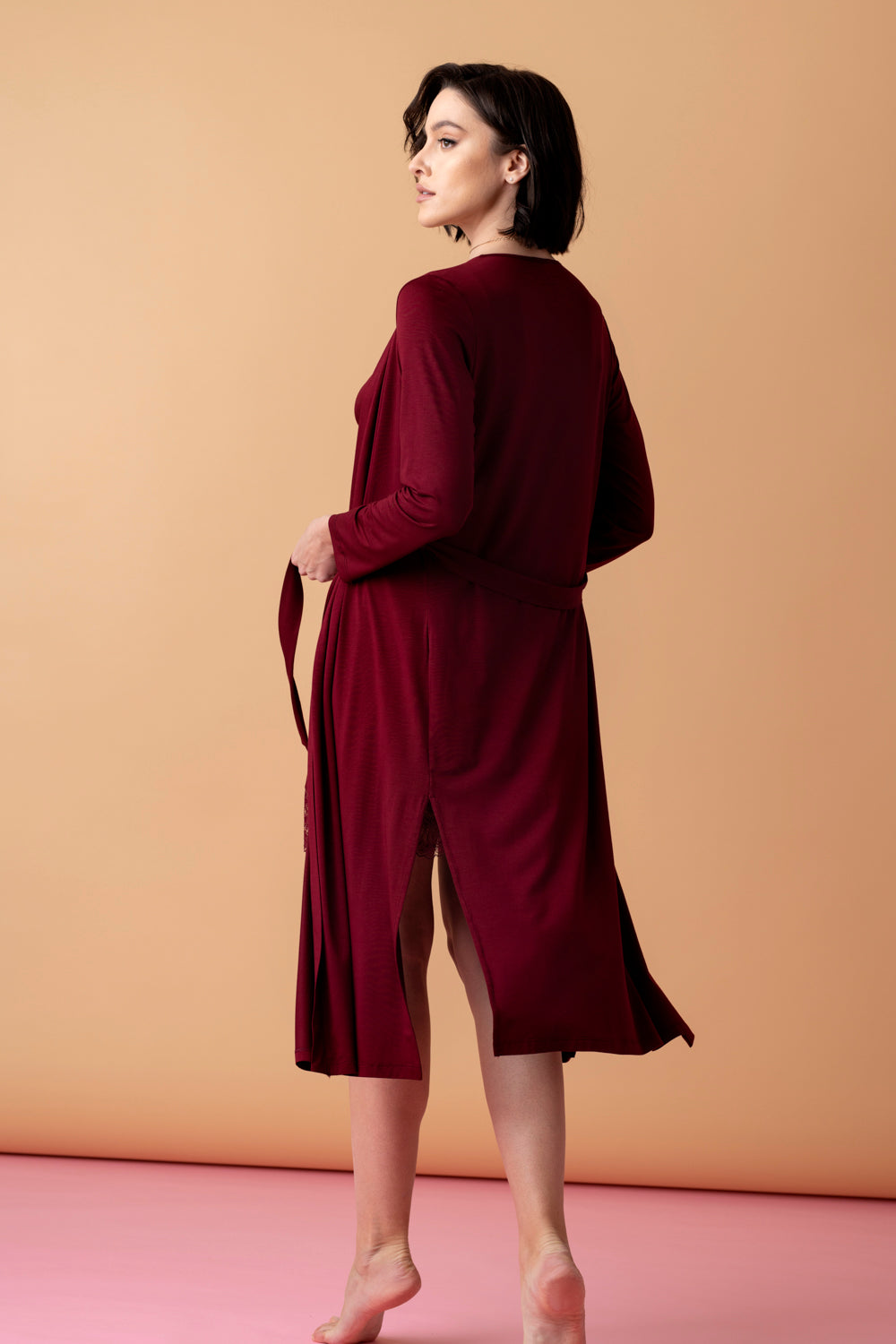
For the colder months, it is worth choosing materials that are soft, pleasant to the skin, and provide thermal comfort suitable for the intended use of the bathrobe. In autumn and winter, materials such as velour, warmer cotton knits, and terrycloth work well, but each of these materials has slightly different properties. Therefore, the label "warm bathrobe" should not be the only selection criterion.
| Material | Key Feature | When to choose it? |
|---|---|---|
| Velour | Soft, pleasant surface and elegant character | For cold mornings, evening relaxation, and as a stylish loungewear piece |
| Brushed cotton knit | Softness and cozy warmth | For everyday wear in autumn and winter, especially if you value comfort |
| Terrycloth | Loop structure that absorbs moisture well | Primarily after a bath or shower |
A good example of a bathrobe intended for the colder part of the year is our midi bathrobe made of warm, brushed cotton knit. Such a material addresses different needs than terrycloth: instead of focusing primarily on absorbency, it is designed to provide comfort during daily wear. This is an important distinction, because a post-bath robe and a robe for spending a long winter evening do not have to be the same model.
On the other hand, women's terrycloth bathrobes are worth considering when the garment is to be regularly put on over a damp body. The characteristic loops increase the surface area of the material, which allows terrycloth to absorb water well. Such a model will be particularly practical after a shower, bath, or home spa session.
When choosing, it is also good to consider the quality of workmanship. Carefully selected material, properly finished seams, and a well-thought-out cut influence both comfort and how the bathrobe looks after successive washes. At Oh!Zuza, materials and styles are chosen to combine comfort with feminine aesthetics, so a warm bathrobe doesn't have to look like a heavy, shapeless garment.
Long or short bathrobe for winter – which will be warmer?
If protection against the cold is the priority, a long bathrobe will usually be a better choice than a short style because it covers a larger part of the legs. However, the length itself does not determine how warm a given model will be. Just as important are the material, its thickness, the fit of the bathrobe, and the temperature in your home. A long but lightweight model may provide less of a "cocooned" feeling than a shorter robe made from a warmer material.
This is why it is best to treat length as one element of your "warmth system." A style reaching lower will be particularly effective for women whose legs get cold quickly in autumn and winter, as well as for quiet evenings on the sofa or mornings in a less heated apartment. Long women's bathrobes also have another advantage: the larger surface area of the material provides a cozy effect without needing a very massive style.
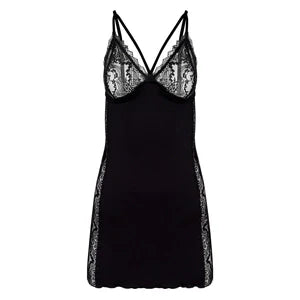
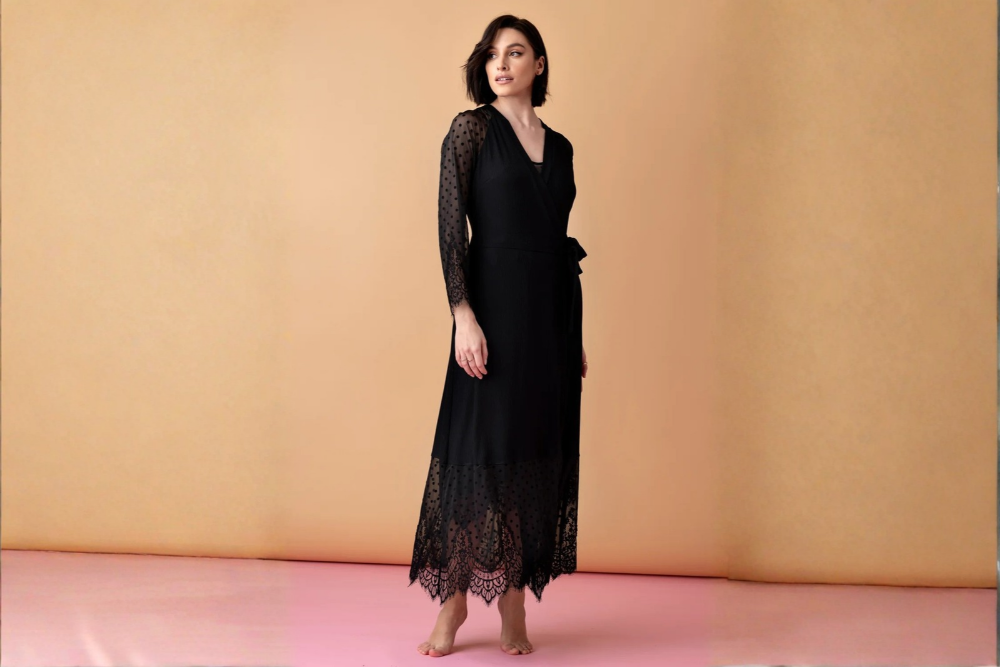
However, not every long bathrobe has to have a typical "winter" character. If feminine elegance is also important, wrap-style cuts are an interesting alternative to thick models. A black long wrap robe with lace trim can serve as an elegant cover for nightwear, as can its lighter variant – the cream long wrap robe with lace trim. These are options for women who, rather than maximum warmth, prefer a combination of greater length with subtle, refined finishing.
The most practical choice can be summarized by a simple rule: the more time you spend in your bathrobe and the more easily your legs get cold, the more sense a longer style makes. If, however, you mainly wear it briefly after waking up or before bed, a midi model can provide more freedom when walking, performing morning tasks, or getting ready to leave.
Is a hooded bathrobe a good choice for autumn and winter?
Yes, a hooded bathrobe is a particularly practical choice for the colder months, especially if you like extra warmth or wear it after bathing. A hood covers the nape, neck, and head—areas that a classic style does not protect from the cold. This does not mean that every winter bathrobe must have one; much depends on when and how long you wear it during the day.
Women's hooded bathrobes are a good solution primarily for those who appreciate functional details. A hood is useful after washing your hair, during a cold morning, or while relaxing in the evening, while pockets allow you to warm your hands and keep small items handy. In practice, these details can decide whether we reach for the robe occasionally or whether it becomes a permanent part of our autumn-winter home wardrobe.
- After a bath – the hood provides extra covering for the head and neck, although it does not replace a towel designed for drying wet hair.
- On cold mornings – it helps limit the feeling of chill right after getting out of bed.
- During relaxation – soft material, a hood, and pockets create a comfortable wrap for a long evening at home.
- In a warmer home – a hood may prove unnecessary, which is why a simpler style without one might be more comfortable for some women.
A good example of combining these features is our beige midi velour bathrobe with hood and pockets. An alternative for women who prefer cooler colors is the blue midi velour bathrobe with hood and pockets. The midi length here is a practical compromise: it provides more coverage than a short style while maintaining freedom of movement during daily activities.
It is worth treating the hood as a functional addition, not an mandatory requirement for a good winter bathrobe. If you are often cold, go from the bathroom to a cooler room, or simply value the feeling of being "wrapped up," you will likely appreciate this style. If, however, the bathrobe is primarily meant to be a light and elegant cover for nightwear, a classic collar may prove more appropriate.
A warm bathrobe does not have to be thick – what else should you look for?

Material thickness is just one factor that affects whether we feel pleasantly warm in a bathrobe. The length of the style, the degree of body coverage, the presence of a hood, the method of tying, and what we wear underneath are also significant. Therefore, a heavy, very thick model will not always be the best solution for autumn and winter—especially in a well-heated home.
A good example is the difference between a bathrobe worn immediately after bathing and a model worn over pajamas or sensual nightwear. In the first case, material absorbency and body coverage may be important, while in the second, softness, freedom of movement, and the right level of warmth are what count. If there is already a layer of nightwear under the bathrobe, a very thick material might even cause overheating.
It is also worth paying attention to the construction. A wrap closure allows you to regulate the fit to your silhouette, a longer hem covers more of the legs, and sleeves of the proper length keep the wrists from being exposed when sitting or raising your arms. In practice, a well-designed cut can be just as important for daily comfort as the material itself.
 Katarzyna Pastwa - Oh!Zuza expert
When choosing a bathrobe for the colder months, I wouldn't follow the rule "the thicker, the better" exclusively. It is much more important to match the model to your daily habits. If we wear a bathrobe for a longer time over nightwear, softness, a comfortable cut, and freedom of movement are what count. For those who get cold quickly, I would recommend paying attention to length, the hood, and how well the style covers the body. This ensures the bathrobe provides comfort without unnecessary heaviness.
This approach helps to avoid a common mistake: buying the thickest available model just because it is supposed to be for winter. A bathrobe should also be matched to the conditions in your home. We need a different level of warmth in a cool bedroom in the morning compared to a heated living room during evening relaxation. The best winter bathrobe is therefore not the one with the most material, but the one whose material and construction match your actual way of using it.
How to choose a winter bathrobe to suit your needs?
A winter bathrobe is best chosen not by a single feature, but by the situations in which it will be used most often. A person who is cold in the morning might need a long or warmer model, while for evening relaxation in a heated apartment, a lighter midi style is sufficient. In practice, it is worth asking yourself three questions: when do I put on the bathrobe, how long do I wear it, and is strong warmth more important to me than lightness and freedom of movement?
- Are you often cold at home? First, look at longer styles, soft materials, and models with hoods.
- Do you wear the bathrobe for several hours? Opt for a comfortable cut that does not restrict movement and is not unnecessarily heavy.
- Do you mainly wear it after bathing? Terrycloth is a good solution, especially if you need a material that absorbs moisture well.
- Are you looking for an everyday bathrobe? It is worth considering women's cotton bathrobes, paying attention to the composition of the specific model and the properties of the material used.
- Is versatility the most important? Classic women's bathrobes are a proposal for women who prefer timeless styles and want to use one model in different situations.
It can also be helpful to think of the bathrobe as an extra layer of your home wardrobe. If you usually put it on over long pajamas, you don't need the same level of warmth as someone wearing a light nightdress underneath. Conversely, in a cool bedroom, length and how the robe overlaps when tied might have more significance. The same model might be perfect for one person, while simply too warm or too light for another.
You shouldn't sacrifice aesthetics for functionality, though. A refined cut, careful finishing, and high-quality materials allow you to combine comfort with a feminine character. This approach is key at Oh!Zuza—a home garment should provide comfort, but also drape well on the silhouette and make you feel attractive even during an ordinary autumn morning.
How to take care of a bathrobe so it retains its softness and good appearance?
The most important rule for bathrobe care is: the washing method must be matched to the material composition and the manufacturer's recommendations on the label. Bathrobes can be made of materials with completely different properties, so the temperature, wash cycle, or drying method suitable for one model may not be right for another.
Frequency of care also matters. A bathrobe worn daily directly after bathing will require different treatment than an elegant model worn occasionally over nightwear. After use, it is best to leave it to dry completely in an airy place instead of folding it up or hanging damp material in a crowded closet. Regular and proper care helps retain the softness, shape, and aesthetic look of the bathrobe for longer.
Models with decorative details require special attention. Lace can be more susceptible to snagging than a smooth surface, so before washing, it is worth checking the recommendations for the specific product and avoiding contact with clothing items equipped with sharp zippers, hooks, or other details that could cause pulls. You will find more practical tips in our guide on how to wash and store lace bathrobes without the risk of snagging.
In the case of soft, carefully finished bathrobes, proper care is particularly important because it allows you to enjoy the material's properties and refined style for longer. Oh!Zuza products are created with an emphasis on quality materials and finish, so it is worth treating care instructions as part of product maintenance, not just information on a label. This way, your favorite bathrobe can retain its comfort and elegant character for seasons to come.
Women's bathrobes for autumn and winter FAQ
Choosing a bathrobe for the colder months usually comes down to a few issues: material, length, hood, and usage method. Below you will find short answers to questions that may help you make a decision.
Women's bathrobes for autumn and winter FAQ - frequently asked questions and answers
Which women's bathrobe is best for winter?
For winter, it is best to choose a bathrobe that provides a cozy, snug feel and is suited to the temperature in your home. For those who get cold easily, longer styles, soft materials, and hooded models usually work better. In a warm home, however, a lighter midi-length bathrobe may be more comfortable.
Is a long bathrobe warmer than a short one?
A long bathrobe covers more of the legs, which is why it can provide greater comfort during chilly mornings and evenings. However, length alone does not determine whether a bathrobe will be warm. The properties of the material, its thickness, the cut, and what you wear underneath the bathrobe also matter.
Is it worth choosing a bathrobe with a hood for winter?
Yes, especially if you get cold often or enjoy extra coziness after a bath. A hood covers the head, nape, and part of the neck, making it a practical addition in cooler rooms. However, if your home is warm, a classic style without a hood may be lighter and more comfortable.
What material should you choose for a bathrobe in autumn and winter?
The choice depends primarily on the intended use. Velour combines softness with an elegant character, warmer knits are great for everyday relaxation, while terry cloth is a good solution after a bath due to its absorbent, looped structure. It is always worth checking the exact composition of a specific model.
Is a thicker bathrobe always warmer?
You should not rely solely on thickness. The perceived comfort is also influenced by the bathrobe's length, construction, way of fastening, the presence of a hood, and the layer of clothing worn underneath. In a well-heated apartment, a very thick model might simply be too warm.
Is a terry cloth bathrobe suitable for winter?
Yes, but its particular advantage is absorbency, which is why it works best primarily after a bath or shower. If you are looking for a bathrobe mainly for long hours of relaxation at home, it is worth comparing terry cloth with soft knits or velour and choosing a material that matches your personal preferences.
Which bathrobe should you choose as a gift in autumn or winter?
A good choice would be a versatile, soft model with a comfortable cut and careful finishing. If you know the recipient's preferences, you can opt for a long style for someone who loves extra warmth or a hooded model for someone who primarily values comfort. It is also worth ensuring you have the right size beforehand.
How often should you wash a bathrobe?
There is no single frequency suitable for every bathrobe. A model worn directly after a bath may require more frequent washing than one worn occasionally over sleepwear. Above all, you should follow the manufacturer's washing and drying instructions and allow the material to dry thoroughly after use.