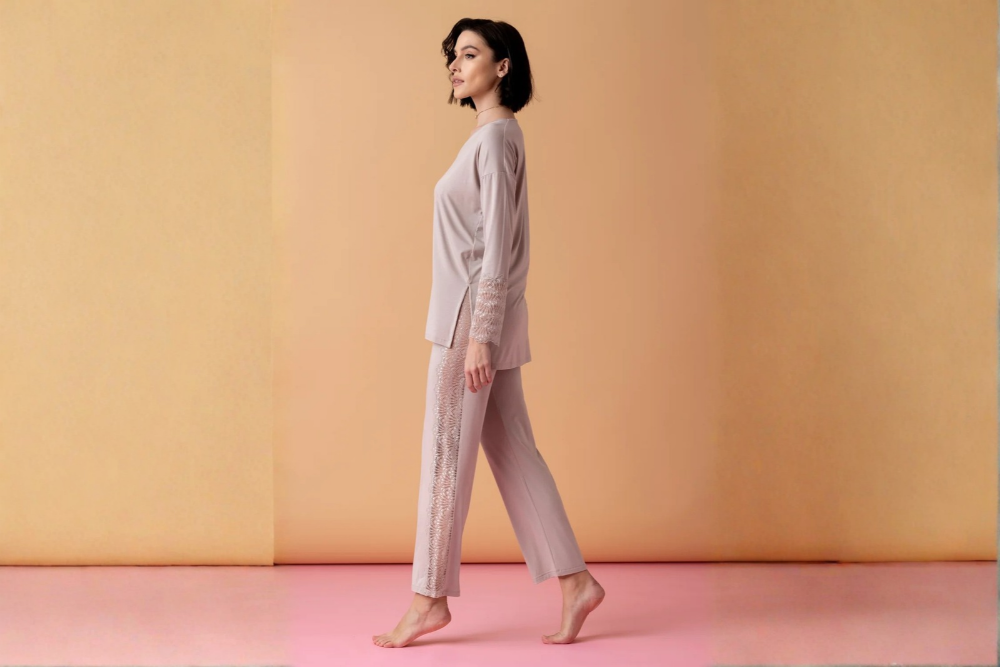
As the nights grow cooler, choosing the right pajamas becomes increasingly important for sleep comfort. However, the thickest material is not always the best solution – in autumn and winter, breathability, softness, the ability to maintain pleasant warmth, and comfort in contact with the skin also matter. For one person, cozy brushed cotton will be a good choice; for another, soft viscose; and yet another will appreciate luxurious silk. So, which pajama material will work best for the cold months? We compare the most important options and offer advice on what to pay attention to in order to match your sleepwear not only to the season, but also to the temperature in the bedroom and your own preferences.
- Which pajama material is best for autumn and winter?
- Viscose for autumn and winter – does it provide enough comfort?
- Is cotton pajama a good choice for cold nights?
- Silk for winter – can a delicate material work for cold months?
- Material isn't everything – what pajama style should you choose for winter?
- How to match pajama material to the bedroom temperature?
- What to look for when buying pajamas for autumn and winter?
Which pajama material is best for autumn and winter?
For autumn and winter, it is best to choose materials that help maintain thermal comfort without sacrificing breathability. In practice, viscose and cotton work particularly well, especially in warmer, brushed versions. Silk is also an interesting option. However, there is no single ideal material for everyone – much depends on the bedroom temperature, your individual perception of cold, and whether you tend to overheat during sleep.
When choosing pajamas for colder months, it is worth looking not only at the fiber name but also at the grammage, material structure, and the style of a specific model. Light pajamas may be sufficient in a well-heated bedroom, while at lower temperatures, a more enveloping material with long legs and sleeves will be more pleasant. That is why a good fashionable women's lingerie shop should offer different solutions for the cooler part of the year, rather than reducing the choice of winter pajamas solely to the thickest material available.
| Material | Key advantage in autumn and winter | For whom? |
|---|---|---|
| Viscose | Softness, breathability, and pleasant drape on the body | For those seeking a balance between coziness and lightness |
| Brushed cotton | More enveloping surface and high comfort on cold evenings | For those who get cold quickly in autumn and winter |
| Silk | Lightness, smoothness, and natural thermoregulatory properties | For those who value high-quality, delicate materials |
A good example of a solution prepared for the cooler part of the year is warm pajamas made of brushed cotton knit. Brushing the fabric creates a soft nap on its surface, making the pajamas fluffier and more enveloping. This shows that thermal comfort is determined not only by the raw material itself, but also by the way the material is manufactured. In the following sections, we will take a closer look at individual solutions and check in what conditions each of them makes the most sense.
Viscose for autumn and winter – does it provide enough comfort?

Viscose is a very good choice for autumn and winter, especially in heated bedrooms and for people who do not like heavy, very thick sleepwear. It is soft, pleasant against the skin, and breathable, allowing you to combine coziness with comfort during many hours of sleep. In the colder months, however, it is not just the composition that matters, but also the thickness of the material and the cut of the pajamas.
This is important because winter pajamas should not act like an extra blanket. If the bedroom is heated, a material that is too thick can cause overheating at night. Viscose offers more freedom in this regard – it works well both during evening relaxation and while sleeping. In our collection of women's viscose pajamas, you can find models in various styles, making it easier to match the level of coziness to your preferences.
However, not all viscose is the same. The perception of warmth is influenced by, among other things, the grammage, weave, or manufacturing method, its finish, as well as the length of sleeves and legs. A good example is the Sonnet long ribbed pajamas with 3/4 sleeves – merlot. The ribbed structure and long cut create an option suitable for the transition period and cooler evenings, without the need to immediately reach for the thickest pajamas.
 Katarzyna Pastwa - Oh!Zuza expert
When choosing pajamas for the cooler months, I wouldn't be guided solely by the thickness of the material. In a heated bedroom, very warm pajamas can simply be less comfortable. Viscose is a good solution for women who want to feel wrapped up but also care about softness, breathability, and freedom of movement. In autumn and winter, it is worth paying special attention to the style – longer legs or sleeves can provide the necessary warmth without giving up a light, pleasant material.
That is why, when shopping, it is worth evaluating the pajamas as a whole: the material is responsible for the properties felt against the skin, while the style largely determines the degree of body coverage. This approach allows you to find a model suitable even for winter without automatically choosing the heaviest and thickest materials.
Is cotton pajama a good choice for cold nights?
Cotton can be a very good material for cold nights, especially when it is used in a thicker, properly finished form. However, the label "100% cotton" or "made with cotton" does not automatically mean the pajamas will be warm. The grammage, structure, and finish of the material also matter – thin cotton can be much less enveloping than soft, brushed knit.
This is one of the most important differences when choosing pajamas for winter. Brushing causes a characteristic, soft layer of fibers to form on the material's surface, providing a more pleasant feeling of coziness. Therefore, those who often get cold in the evenings may want to look at warm pajamas with a boat neckline and straight trousers. This is an example of a model where the winter character is determined not by one parameter, but by a combination of the material, its finish, and the long cut.
Cotton is not the foundation of the entire Oh!Zuza nightwear range – viscose plays a much greater role in this category. This material does, however, appear in selected warmer models and clothing. Those who particularly value cotton can also view our women's cotton clothing. It is therefore worth choosing a material based on its specific application, rather than assuming one type of fiber will be the best in every situation.
So, what to choose: viscose or cotton? If the bedroom is heated and your priority is softness, lightness, and breathability, viscose will be a very versatile solution. If, on the other hand, you get cold easily and want a stronger wrapping effect, warmer, brushed cotton might work better. In autumn and winter, it is worth choosing pajamas based on how you perceive the temperature, and not just on the date on the calendar.
Silk for winter – can a delicate material work for cold months?
Yes, silk can be a good material for autumn and winter, although it provides a different kind of comfort than thick, brushed cotton. Instead of a strong wrapping effect, it offers lightness, smoothness, and natural thermoregulatory properties. It is an interesting choice primarily for a heated bedroom and for women who prefer delicate nightwear over heavy, very thick materials even in winter.
Silk is a protein fiber, and its properties mean that the material can help reduce both the feeling of cold and the discomfort associated with overheating. This does not mean, however, that thin silk pajamas will be warmer than thick brushed cotton pajamas. Thermoregulation and thermal insulation are two different features – the former helps maintain comfort in changing conditions, while the latter determines how effectively a material limits heat loss.
Silk is worth considering in winter especially when:
- your bedroom is heated and you don't need very thick sleepwear,
- you often get too hot under the duvet,
- you value light and exceptionally smooth materials,
- you are looking for pajamas that combine a night function with elegant design,
- you care about a natural, high-quality fiber.
An example of such an approach is the Lullaby long silk pajamas Oh!Zuza – deep navy, paisley pattern. Long sleeves and legs increase the area of the body covered by the material, and the silk allows the entire set to remain light. This solution shows that winter pajamas don't have to be massive to well serve the needs of the colder season.
When choosing silk, it is also necessary to distinguish it from satin. Silk defines the type of fiber, while satin is a method of manufacturing the material and can be made from various raw materials. For the same reason, silk should not be equated with viscose satin – the latter is made from viscose fibers and has different properties and composition. An informed choice begins with checking the information on the label, not just assessing the characteristic smooth surface of the material.
Material isn't everything – what pajama style should you choose for winter?

For autumn and winter, the best styles are those that cover a larger surface area of the body without restricting movement during sleep. Long trousers and sleeves can improve thermal comfort without the need to choose a very thick material. This is a particularly practical solution in a heated bedroom, where pajamas that are too warm can quickly become uncomfortable.
A good starting point is therefore women's long-sleeved pajamas. Greater shoulder coverage is significant especially during cool evenings and mornings, when the pajamas are used not only during sleep but also while resting before going to bed. If you care about even more warmth, it is worth looking at women's long pajamas, which combine a full-coverage top with long trousers.
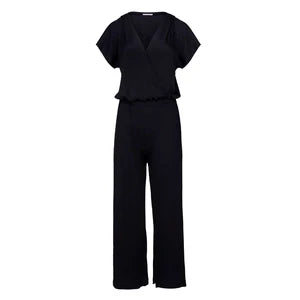
However, not only length matters, but also width and the way the style fits the silhouette. Looser pajamas allow for more freedom of movement and do not adhere closely to the body when changing positions at night. An example is the Jackie loungewear pajamas with wide trousers – black, which combines long, wide trousers with a style also suitable for quiet relaxation at home.
In practice, it is worth thinking of winter pajamas as a combination of two elements: the material is responsible for what we feel directly against the skin, and the style determines how much of the body we cover with it. Therefore, light, long pajamas can provide more comfort in a heated apartment than a very thick set with a short cut. It is precisely this matching of material and style to sleeping conditions that is more important than simply labeling a product as "winter."
How to match pajama material to the bedroom temperature?
You should choose your pajama material primarily according to the actual bedroom temperature and your own sensitivity to cold, and only then according to the season. Two people sleeping in winter under different conditions may need completely different nightwear. In a strongly heated room, light viscose can provide more comfort than a thick material, while in a cold bedroom, warmer pajamas with long sleeves and legs will work better.
A good point of reference is the recommended sleep temperature. According to the Sleep Foundation, most adults sleep best in a room with a temperature of about 18°C, although individual preferences may vary. This does not mean that everyone should set the thermostat to exactly this value. It does, however, show why winter pajamas should help maintain comfort and not lead to overheating under the duvet.
| Bedroom conditions | What to pay attention to? | What choice to consider? |
|---|---|---|
| Warm, heated bedroom | Breathability and lightness | Viscose or silk, also in a longer style |
| Moderate temperature | Balance between warmth and breathability | Long viscose pajamas or light cotton pajamas |
| Cold bedroom | Greater body coverage and a more enveloping material structure | Brushed cotton, long trousers, and long sleeves |
Viscose is particularly versatile in this respect, as it can be the foundation for both light nightwear and clothing intended for relaxing at home. If you appreciate its softness outside the bedroom as well, it is worth looking at women's viscose clothing. High-quality materials and refined styles allow you to create a wardrobe where comfort does not mean giving up feminine, elegant aesthetics.
When choosing, you can apply a simple rule: the colder the bedroom and the greater the tendency to get cold, the more important the length of the style, grammage, and the enveloping structure of the material become. If, on the other hand, you often wake up feeling hot, a better direction will be a breathable material and an appropriately light model. Thanks to this, the choice of pajamas results from the actual sleeping conditions, and not just from the assumption that you always have to sleep in the thickest set in winter.
What to look for when buying pajamas for autumn and winter?
When buying pajamas for autumn and winter, check primarily the material composition, style, quality of workmanship, and whether the model corresponds to the conditions in your bedroom. It is not worth being guided solely by terms like "warm" or "winter." Much more about comfort will be revealed by information on the fibers used, the length of sleeves and legs, and the structure of the material.
A good choice will be fashionable women's pajamas that combine a comfortable cut with refined design and carefully selected materials. At Oh!Zuza, great importance is placed on the quality of workmanship and wearing comfort. This is especially important for nightwear, which remains in direct contact with the skin for many hours.
Before buying, it is worth checking:
- exact composition – do not assess pajama properties based solely on appearance;
- material structure and finish – for example, brushed cotton gives a different feel than its thin, smooth variant;
- sleeve and leg length – greater body coverage can be just as important as material thickness;
- freedom of style – pajamas should not restrict movement when changing positions during sleep;
- care instructions – especially with more delicate materials, it is worth following the manufacturer's recommendations to maintain their properties and aesthetics for longer.
The composition is also particularly important when you are choosing sensual nightwear. A smooth, subtly shimmering surface does not automatically mean silk. Satin defines the material's manufacturing method, so it can be made from various fibers – for example, viscose satin is not the same as silk. Reading the composition allows you to consciously assess what will actually be in contact with your skin.
This is one of the reasons why it is worth investing in clothing made from natural materials and consciously analyzing the origin of fibers and the quality of workmanship. A well-chosen pair of pajamas does not necessarily have to be intended only for the few coldest weeks of the year. A model tailored to the bedroom temperature and individual warmth preferences can be suitable from the first cool autumn evenings until the beginning of spring.
The best pajamas for autumn and winter are therefore not necessarily the thickest ones. For many women, an optimal solution will be long pajamas made of soft viscose; those who are particularly sensitive to the cold may prefer brushed cotton, while silk will work well for those who seek lightness and an elegant finish. The final choice should combine three elements: the properties of the material, the appropriate style, and the actual conditions in which you sleep.
Autumn and winter pajamas FAQ - frequently asked questions and answers
Which pajama material is best for winter?
There is no single material that is best for everyone. In a heated bedroom, soft and breathable viscose can work very well, while people who get cold easily may prefer more enveloping brushed cotton. Silk, in turn, is an option for women who value lightness, smoothness, and natural thermoregulatory properties.
Is viscose suitable for winter pajamas?
Yes. Viscose is also a good choice for the colder months, especially if the bedroom is heated. It is soft, breathable, and pleasant against the skin. In autumn and winter, it is worth choosing models with longer legs or sleeves, which can increase the level of coziness without the need for very thick material.
Which is better for winter – viscose or cotton?
A lot depends on the type of material and individual temperature perception. Viscose will be suitable for people who value lightness, softness, and breathability. Brushed cotton can provide a more enveloping feel, which is why it is worth considering in a colder bedroom or if you get cold easily.
Are silk pajamas suitable for winter?
Yes, especially for a heated bedroom. Silk does not provide the same enveloping effect as thick, brushed cotton, but it is light, smooth, and has natural thermoregulatory properties. In winter, it is worth paying attention to long silk pajamas that cover a larger surface area of the body.
Are satin pajamas and silk pajamas the same thing?
No. Silk is a type of fiber, while satin describes the way the material is made and can be produced from different raw materials. Therefore, a distinction is made between viscose satin and silk satin. When buying pajamas, it is worth checking the exact composition of the product instead of judging the material solely based on its smoothness and sheen.
Should winter pajamas be very thick?
Not always. In a heated bedroom, pajamas that are too thick can be less comfortable than a lighter, breathable model. It is worth considering not only the thickness of the material but also its properties, the length of the sleeves and legs, the type of duvet, and your own sensitivity to the cold.
How to choose pajamas for someone who gets cold easily?
It is worth looking for a long style that covers the arms and legs, as well as a more enveloping material. Brushed cotton can be a good solution. The cut also matters – the pajamas should provide freedom of movement and comfort both during sleep and while relaxing in the evening.