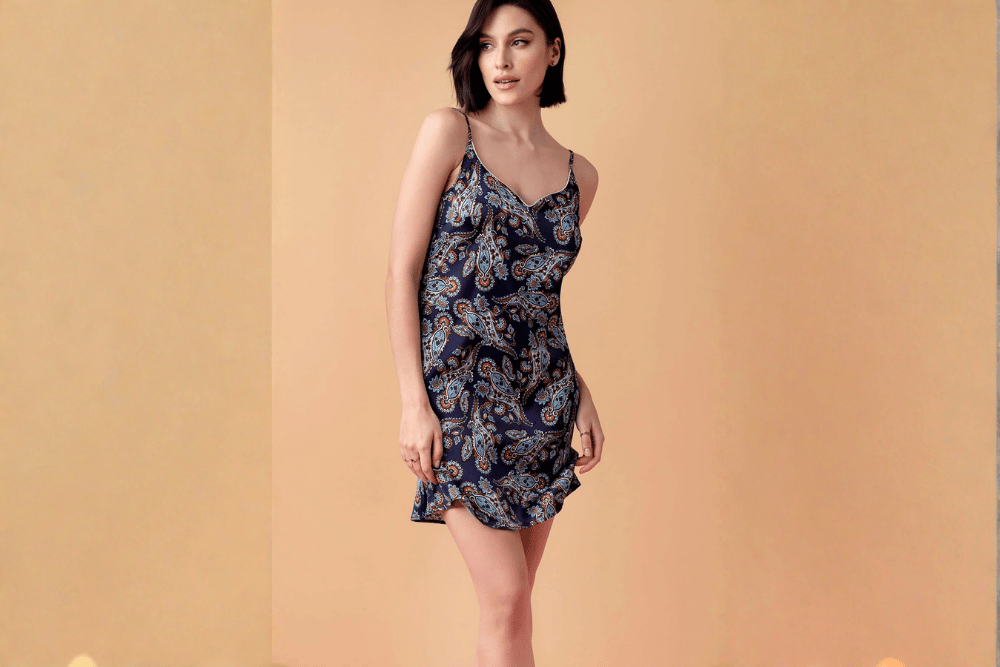
Pajamas don't have a monopoly on comfortable sleep. If you don't like trouser legs bunching up under the duvet, elastic waistbands, or simply want to feel feminine even after the day is over, a satin nightgown can prove to be a much more pleasant alternative. Light, loose, and softly draping over the figure, it combines the comfort of sleepwear with an elegance often lacking in classic sets. However, it's worth remembering that satin refers to the way the material is made, not a specific type of fiber, so its composition is very important. Viscose satin is a particularly interesting choice, combining a smooth, subtly shimmering finish with a pleasant feel against the skin. This means that a well-designed nightgown doesn't have to be lingerie reserved for special occasions but can become a comfortable and elegant element of a daily evening ritual.
- Why can a satin nightgown be more comfortable than pajamas?
- What is the difference between satin and viscose satin?
- For whom will a nightgown be a better choice than pajamas?
- How to choose the style of a satin nightgown for your needs?
- Will a satin nightgown work all year round?
- How to combine comfort, quality, and elegance in nightwear?
- Satin nightgowns FAQ – frequently asked questions and answers
Why can a satin nightgown be more comfortable than pajamas?
A satin nightgown can provide more freedom than classic pajamas because it has no elastic waistband or trouser legs that can shift or bunch up when you change positions. The loosely fitting style allows for more body freedom while maintaining an elegant, feminine character of the nightwear. It is this combination of comfort and aesthetics that makes satin nightgowns a full alternative to a two-piece set.
The difference is especially noticeable when you frequently change positions during sleep. In pajamas, the pants can twist with the body, while the elastic remains in one place and can cause discomfort. A nightgown allows greater freedom for the legs, especially if it has a sufficiently loose cut and a length adjusted to your preferences. However, this does not mean that it will always be a better solution – people who like more body coverage or are bothered by the nightgown bunching up may still prefer fashionable women's pajamas.
The most important differences felt during nighttime rest can be summarized in a few points:
- no elastic waistband – nothing presses on the stomach when lying down or changing positions,
- greater leg freedom – no pants also means no trouser legs that can shift during sleep,
- light, uncomplicated form – the nightgown creates a single layer of nightwear instead of a two-piece set,
- elegance without sacrificing comfort – a well-designed style can be both striking and comfortable for everyday wear.
A good example of this approach is the Bliss viscose satin women's nightgown – dusty pink. The use of viscose satin allows combining the characteristic smoothness and subtle sheen of a satin weave with the properties of viscose. In practice, the comfort of nightwear is determined not only by the term "satin" but also by the material composition, construction, and meticulous finishing. This is particularly important if the nightgown is to serve not only as attractive lingerie for a special evening but primarily for regular sleep.
What is the difference between satin and viscose satin?

Satin is not the name of a specific fiber, but a term for a characteristic weave, which gives the material a smooth, often lustrous surface. Therefore, it can be made from various raw materials. Viscose satin, on the other hand, is based on viscose fibers, and its composition is crucial for the properties of the finished lingerie. That's why when choosing a nightgown, it's worth looking not only at its appearance but also at the material composition information.
The most important differences are worth organizing in a table:
| Feature | Satin | Viscose Satin |
|---|---|---|
| What does the name mean? | Refers primarily to the method of material production, not one specific raw material. | Indicates a satin material made from viscose fibers. |
| Composition | Can vary, so check the tag or product description. | Based on viscose, often with a small addition of fibers to increase elasticity. |
| Appearance | Smooth surface and characteristic sheen depending on the specific material. | Elegant, smooth surface and subtle sheen that complements nightwear well. |
| Feel when worn | Largely depends on the type of fibers used. | Viscose is soft and absorbs moisture well, so it can provide a pleasant feel against the skin. |
This distinction is particularly important when shopping online. Two nightgowns described as "satin" do not necessarily have the same composition or provide identical comfort. For this reason, instead of relying solely on the sheen visible in the photo, it's worth checking the product description. If you want to learn more about this topic before purchasing, the guide is satin good for summer? Facts and myths will also be helpful.
For viscose satin sleepwear, the following are particularly noteworthy:
- material softness and pleasant contact with the skin,
- viscose's ability to absorb moisture, which is important during many hours of rest,
- elegant, subtle sheen, thanks to which the nightgown can look more sophisticated than a classic sleep set,
- lightness and drape, which allow combining a feminine cut with everyday comfort.
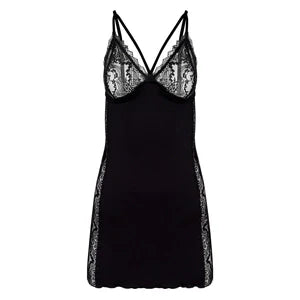
A good example is the Bliss women's viscose satin nightgown – black. The model shows that elegant nightwear does not have to rely solely on visual effect – the quality of the material, thoughtful design, and careful craftsmanship are equally important. This is precisely the combination of aesthetics, modern design, and comfort that Oh!Zuza focuses on when designing lingerie that should look good not only in photos but, above all, when worn.
For whom will a nightgown be a better choice than pajamas?
A nightgown will be a good choice primarily for women who value freedom of movement during sleep and dislike an extra layer of fabric on their legs. The absence of pants and an elastic waistband means that such a style can give a greater sense of lightness. At the same time, there's no need to give up an elegant form – modern women's nightgowns can combine a simple construction, refined details, and materials suitable for many hours of skin contact.
A nightgown is a particularly interesting alternative if you want to combine everyday comfort with a more feminine character of nightwear. A shorter model may suit people who quickly get warm under the duvet, while a longer style provides more coverage without the need for pajama bottoms. The construction of the top also matters – for example, strappy nightgowns leave the shoulders uncovered and work well for women who prefer light nightwear.
However, choosing a nightgown over pajamas should not be treated as a question of which type of lingerie is objectively better. Much depends on how you sleep. If you often get cold, like to have your legs covered, or appreciate stronger body coverage, a two-piece pajama set may prove more practical. If, on the other hand, elastic bands, cuffs, and shifting trouser legs bother you, a nightgown eliminates several elements that can cause nighttime discomfort.
It's also worth looking at a nightgown not just as practical sleepwear. Elegant lingerie can become part of an evening ritual – just like skincare, dimming the lights, or putting away your phone. Putting on something soft and aesthetic symbolically separates the active part of the day from rest. That's why a satin nightgown doesn't have to be saved for a special occasion. If it's comfortable and well-made, it can be worn every night.
An example of a light, elegant form is the Grace short viscose satin nightgown - cream. When choosing a similar model, it's worth paying attention not only to the color or length but also to the quality of the material, the finishing of the seams, and how the style drapes on the figure. These details largely determine whether an elegant nightgown will remain lingerie worn occasionally or become a comfortable element of daily rest.
How to choose the style of a satin nightgown for your needs?
A good nightgown style should primarily match how you like to sleep, and only then follow trends. Length, fit, top construction, and strap width all matter. If you want lightness and great freedom of movement, a shorter, strappy nightgown will be a natural choice. Women who prefer more body coverage, however, can opt for long women's nightgowns, which cover more of the legs but still allow you to do without pajama bottoms.
When choosing, it's worth paying attention to several elements:
- length – shorter models give a greater sense of lightness, while longer ones provide more coverage,
- cut – the style should not excessively hug the body or restrict movement when changing positions,
- straps – their construction affects both comfort and how the nightgown drapes on the figure,
- material – for lingerie worn for many hours, its softness, quality, and pleasant contact with the skin are particularly important,
- finish – carefully made seams and details are important not only for aesthetics but also for comfort of use.
It's also worth being careful about a common mistake: choosing a nightgown solely based on the product photo. A striking neckline or a fitted cut may look beautiful, but lingerie intended for regular sleep should allow adequate freedom. A good method is to ask yourself a simple question: will I be comfortable in this style even after several hours of sleep, when I will be changing positions many times?
An interesting proposition for women who like to combine a simple form with more expressive designs is the Frida satin strappy nightgown - blue print. It shows that nightwear can be both functional and visually refined, and the choice does not have to be limited to classic black or plain, subdued colors.
Size also matters. A nightgown that is too small can pull during sleep, while an excessively large one can shift and twist around the body. Therefore, it is best to consult the size chart for a specific model, rather than automatically choosing the size worn in other brands. Oh!Zuza offers selected styles in a wide range of sizes, including plus sizes up to 4XL, making it easier to match the model to your figure and your own preferences for freedom.
Will a satin nightgown work all year round?

A satin nightgown can work all year round, but comfort primarily depends on the material composition, style, and bedroom temperature. The term "satin" itself doesn't tell you whether a particular nightgown will be suitable for a warm or cool night. In the case of viscose satin, the properties of viscose are important, and the light construction of the nightgown further limits the number of layers around the body.
In summer, short styles with thin straps, which leave a significant part of the arms and legs uncovered, can be particularly practical. The smooth surface of viscose satin gives a pleasant feeling on the skin, and viscose absorbs moisture well, which is important on warmer nights. However, this does not mean that every material described as satin will behave identically – so it's always worth checking its exact composition before purchasing.
In autumn and winter, there's no need to automatically give up nightgowns in favor of pajamas. If the bedroom is heated and you sleep under a warmer duvet, light nightwear can still provide adequate comfort. People who easily get cold, however, can choose a longer style or complement the nightgown with a bathrobe during evening relaxation before bed. The best nightwear should not be chosen solely according to the season, but also to the room temperature and individual perception of warmth.
A satin nightgown also has another advantage – it doesn't have to disappear from your wardrobe with the changing seasons. You can change how you wear it, adjusting the length and additional layers to the conditions. This allows women's satin clothing to form a coherent base for a home wardrobe, where elegance is not reserved exclusively for special occasions.
 Katarzyna Pastwa
Oh!Zuza Expert
When choosing a satin nightgown for regular sleep, it's worth looking beyond just the sheen of the fabric. Its composition, lightness, and the construction of the design are key. Viscose satin allows you to combine an elegant, smooth surface with the properties of viscose, which is why it fits well with nightwear designed with both aesthetics and everyday comfort in mind.
How to combine comfort, quality, and elegance in nightwear?
Comfortable and elegant nightwear should be designed so that its attractive appearance does not come at the expense of comfort. In practice, this means appropriately chosen material, a loose cut, and meticulous finishing. A nightgown can subtly emphasize the figure, but during sleep, it should not restrict movement, tightly hug the body, or require constant adjustment. It is precisely the balance between aesthetics and functionality that determines whether a beautiful model will actually become part of your everyday wardrobe.
The quality of materials is also of great importance. In the case of viscose satin, an elegant sheen goes hand in hand with softness and the characteristic way the material drapes on the figure. This allows the nightgown to look impressive without heavy embellishments or overly complicated construction. It is also worth paying attention to details: the way seams are made, the finishing of edges, straps, and how individual elements behave during movement.
A good way to evaluate nightwear is to use a simple "three questions test":
- Can I freely change position? The nightgown should not restrict movement or excessively pull on the body.
- Is the material pleasant even after several hours? Lingerie remains in contact with the skin for a significant part of the night, so the initial impression upon touching the material is not enough.
- Do I feel good in it even outside of bed? A well-designed nightgown should provide comfort even during evening reading, morning coffee, or quietly preparing for sleep.
This last point perfectly illustrates the difference between casual sleepwear and thoughtful nightwear. Elegance doesn't have to mean lace, a strong sheen, or a style exclusively for a special occasion. It can stem from the quality of the material, appropriate proportions, and details that make even a simple model look sophisticated.
This approach is also important when choosing a brand. The fashionable women's lingerie store Oh!Zuza focuses on high-quality materials, refined designs, and modern patterns, allowing nightwear to combine everyday functionality with feminine aesthetics. Instead of choosing between "comfortable" and "elegant," it's worth looking for models where both of these features result from a well-thought-out design.
This is why a satin nightgown can be more than an alternative to pajamas. It can change the way you think about your night wardrobe: from items worn exclusively to bed to clothes in which you pleasantly begin and end your day. If the material is well-chosen, the cut provides freedom, and the craftsmanship is of high quality, elegance becomes a natural part of comfort, rather than an addition achieved at its expense.
Satin Nightgowns FAQ – Frequently Asked Questions and Answers
Choosing a nightgown often raises questions about material, style, and comfort. Below you will find brief answers to the most common doubts regarding satin nightgowns – from the differences between satin and viscose satin to choosing the right length and care.
Is a satin nightgown comfortable for sleeping?
Yes, provided it has a sufficiently loose cut and is made of skin-friendly material. A nightgown has no trousers or elastic at the waist, so it can be particularly comfortable for women who find constricting or rolling up pajama elements bothersome during sleep.
Are satin and viscose satin the same?
No. Satin describes the way a material is made, not a specific type of fiber. Therefore, it can be made from various raw materials. Viscose satin uses viscose fibers, so when purchasing, it's worth checking the full composition of the product, and not relying solely on the term "satin."
What's better for sleeping – a nightgown or pajamas?
There isn't one solution that suits every woman. A nightgown offers more freedom for the legs and eliminates elastic at the waist, while pajamas hug the body more closely and may be preferred by those who like to sleep with their legs covered. The best choice therefore depends on individual habits.
Is a long satin nightgown suitable for sleeping?
Yes. A longer cut can be a good solution for women who want to combine the freedom characteristic of a nightgown with more coverage for the legs. It's important that the model is not too tight and allows enough room for comfortable movement during sleep.
Will a satin nightgown work in the summer?
It can work well during warm nights, but much depends on the material's composition. A short, strappy nightgown made of viscose satin leaves a large part of the body exposed, and viscose absorbs moisture well. Therefore, it's worth paying attention to both the cut and the exact composition of the chosen model.
How do I choose the size of a satin nightgown?
It's best to use the size chart provided for the specific product. A nightgown for regular sleeping should fit loosely on the figure and not restrict movement. It's not worth automatically choosing the same size you wear in every other brand, as the construction of individual models can vary.
How to care for a viscose satin nightgown?
The manufacturer's recommendations on the label of a specific product are most important. Viscose requires proper handling, especially when wet, so gentle washing and avoiding vigorous wringing help maintain the material's properties and aesthetic appearance for longer.