A poorly chosen bra can ruin even the best-composed outfit – a band that is too loose doesn't provide support, and cups that are too small cause discomfort after just a few hours of wear. Many women wear the wrong size for years and don't even know it, which is why it's worth checking it yourself at home. All you need is a tape measure, a few minutes, and knowledge of simple rules to better fit lingerie to your figure, improve daily comfort, and consciously choose models that sit well on the body.
How to correctly measure your underbust band?
Choosing the right bra always starts with accurately measuring your underbust band. It is this measurement that is responsible for most of the bust support – not the straps, as many people still believe. A poorly chosen band causes the bra to shift during wear, dig into the body, or fail to stabilize the bust correctly.
To take the measurement correctly, you only need a soft tape measure. Stand straight and measure your underbust band snugly, preferably on an exhale. The tape measure should lie close to the body but not cause discomfort. It's worth writing down the result without rounding.
When measuring, it's worth remembering a few rules:
- take the measurement without a bra or in a soft, unpadded model,
- the tape measure should run evenly around the body,
- do not raise your arms while measuring,
- it's best to measure twice to be sure of the result.
In practice, many women choose too loose a band because it seems more comfortable during the first wear. This is one of the most common mistakes, which later affects wearing comfort and body shape. A well-fitted bra should lie firmly against the body even on the first hook-and-eye closure.
Soft bralettes are also gaining popularity, offering comfort without a constricting feeling thanks to elastic materials and well-designed cuts. High-quality models are distinguished by meticulous finishing and comfort of wear even for many hours.
How to measure your bust and choose the cup size?

The underbust band alone is only half the battle. The second step is to measure the bust at its fullest point, as the difference between these two measurements determines the cup size. Many women wear cups that are too small, which causes compression, breasts pulling away from the sides, or an unsightly puckering of the fabric.
It's best to take the measurement in a soft, non-push-up bra or without any lingerie. The tape measure should lie gently against the body but not compress the breasts. It's important to stand straight and breathe freely while measuring.
The most commonly used scheme is as follows:
| Difference between measurements | Cup size |
|---|---|
| 12-14 cm | A |
| 14-16 cm | B |
| 16-18 cm | C |
| 18-20 cm | D |
| 20-22 cm | E |
It's worth remembering that tables are only a starting point. Every figure is different, so the same size can fit differently depending on the style or construction of the bra. Especially in soft models, elastic materials, appropriately shaped cups, and quality of workmanship are of great importance.
More and more women today choose elegant women's lingerie that combines wearing comfort with a refined cut. A well-sewn bra improves body proportions and ensures comfort throughout the day, which is why it's worth paying attention not only to the size but also to the quality of workmanship.
An example is the Diary lace set bralette and briefs with Oh!Zuza charm – black, which, thanks to its soft construction and flexible finishes, adapts well to various body types.
How to read a bra size?
After taking measurements, comes the moment that many women find most complicated - reading the correct bra size. In practice, the notation is simple: the number indicates the underbust measurement, and the letter indicates the cup size. The problem arises when we try to fit the size purely "by eye" or rely on habits from a few years ago.
For example, size 75C means:
- 75 - underbust measurement,
- C - cup size resulting from the difference in measurements.
The most common mistake is the belief that a cup letter always denotes the same breast size. In reality, a C cup with a 70 band looks completely different from a C cup with an 85 band. That's why it's so important to analyze the entire size, not just the letter.
It's also worth remembering that different styles can fit differently on the figure. Soft, unpadded models, lace bras, or modern sets often adapt better to the body than heavily constructed designs.
Women's lingerie sets that combine comfort with an aesthetic finish are currently very popular. A well-fitted set should not constrict or restrict movement - especially if it's made from elastic, high-quality materials.
An example is the Mystery lace set bralette and Brazilian briefs Oh!Zuza – black, which, thanks to soft lace and a refined design, adapts well to the figure and provides daily wearing comfort.
Common mistakes when choosing a bra

Many women wear ill-fitting bras for several years, unaware that the bra is responsible for daily discomfort, pressure, or problems with clothes fitting. Interestingly, the problem is most often not the cup itself, but an incorrectly chosen band.
A too-loose band under the bust shifts the weight of the breasts to the straps, which often causes shoulder and back pain. Conversely, cups that are too small can deform the shape of the bust and cause the lingerie to show through clothing unattractively.
The most common recurring mistakes are:
- choosing a band that is too loose "for comfort",
- wearing cups that are too small,
- fastening a new bra on the last hook,
- incorrectly adjusting the straps,
- buying a bra solely based on its appearance.
In practice, a well-fitted bra should be almost imperceptible when worn. The back of the bra must lie horizontally, the gore should lie flat against the body, and the breasts should fit into the cups without compression or gaping edges.
More and more women today pay attention not only to fit but also to the aesthetics of their lingerie. Elegant women's bodysuits, for example, are popular for shaping the figure while also providing wearing comfort. High-quality materials and refined cuts ensure that lingerie sits better under clothes and maintains its appearance for a long time.
A good example is the Secret lace set bralette and Brazilian briefs Oh!Zuza – black, which combines soft lace with a comfortable construction that adapts well to the figure.
What are sister sizes and when should you know them?
Sister sizes are one of the most frequently overlooked concepts when buying a bra, yet they can completely transform the comfort of wearing lingerie. These are sizes that have a similar cup volume but differ in the underbust band. This makes it easier to find a model that better fits the figure, especially if a particular style feels too tight or too loose.
For example, a woman wearing size 75C might also feel good in a 70D or 80B – it all depends on the bra's construction and individual body proportions. This is precisely why it's not worth sticking solely to one size written on the label.
In practice, sister sizes prove particularly helpful with soft models, lace sets, or unpadded styles. Elastic materials can fit differently than classic underwired bras, so sometimes a slight change in the band provides a much better effect and greater comfort.
If you want to better understand how these sizes work, it's worth reading the article what are sister sizes, which thoroughly explains how individual equivalents work and when to use them.
Soft, feminine sets that adapt well to various body types are increasingly popular today. An example is the Diary bralette and briefs set with lace back Oh!Zuza – black, made from high-quality materials ensuring wearing comfort and an aesthetic finish.
How to check if your bra is well-fitted?
Even a correctly calculated size doesn't guarantee a perfect fit. Every style can fit differently, so after putting on a bra, it's worth paying attention to a few elements that quickly show whether the model truly suits your figure.
A well-fitted bra should stably support the bust without feeling constrictive. The band under the bust must lie flat against the body and stay in place during movement. If it rides up on your back or shifts when you raise your arms, the band is probably too loose.
The cups are equally important. Breasts should fill them completely, without gaping edges and without the effect of the bust "spilling out." The bra's gore should lie flat against the body, and the straps should only gently stabilize the whole - they shouldn't bear the main weight.
In practice, the quality of workmanship is also of great importance. Soft lace, elastic finishes, and well-designed cuts ensure that lingerie adapts better to the figure and remains comfortable even when worn for many hours. This is especially important for sets worn daily.
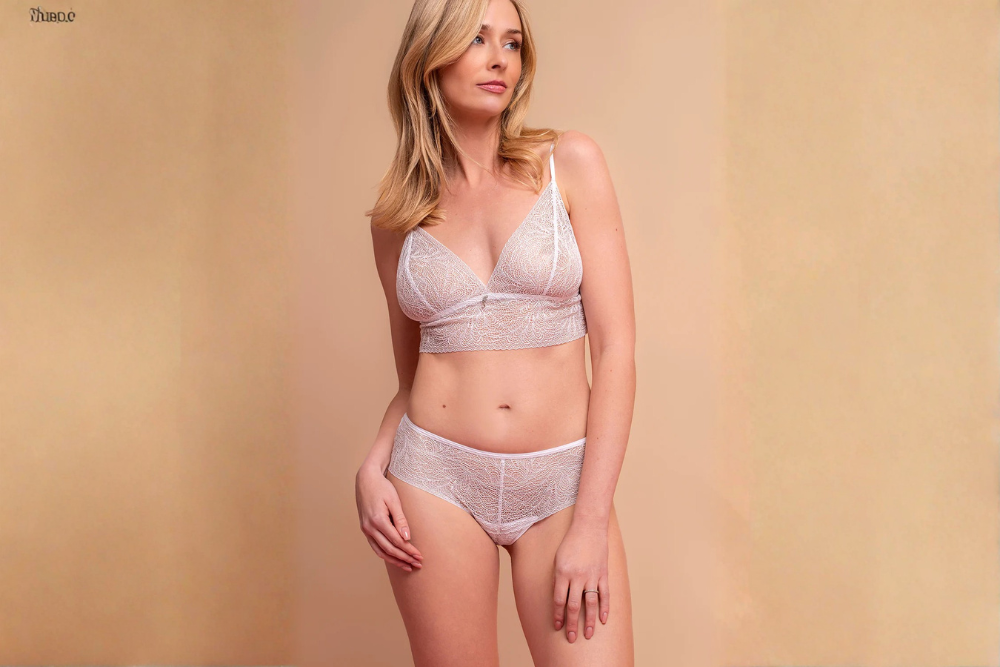
A good example is the Journal lace set bralette and Brazilian briefs Oh!Zuza – white, which, thanks to its soft construction and refined details, sits well on the body and provides high comfort of use.
The best-fitting bra is one you forget about after a few minutes of wearing. If nothing pinches, shifts, or requires constant adjustment, it means the size has been chosen correctly.